Cherry Blossom Viewing- A “How To” Guide for the Novice

I`ve been remiss as a blogger covering Japan given my lack of attention to “Hanami”- loosely translated as “viewing of cherry blossoms.” I`ve felt a hesitation to do so given the ubiquitous coverage and adoration piled upon the petaled pink crack however, there are vital cultural aspects which must be highlighted prior to embarking upon a Hanami session solo or with a group of novice friends. Following these instructions will at best garner an invitation to join a tarp and at worst prevent the appearance of a tourist intent on a photo-op.

Warning: The behavior described below is not typical. During this two weeks of the year, New Orleans and Tokyo become sister cities in every aspect, thus placing them firmly in Ouisar-san`s “Top 10 Most Entertaining Cities to Visit.” Instead of fighting over beads thrown from parade floats, people of all nationalities vie for the best position under the trees.

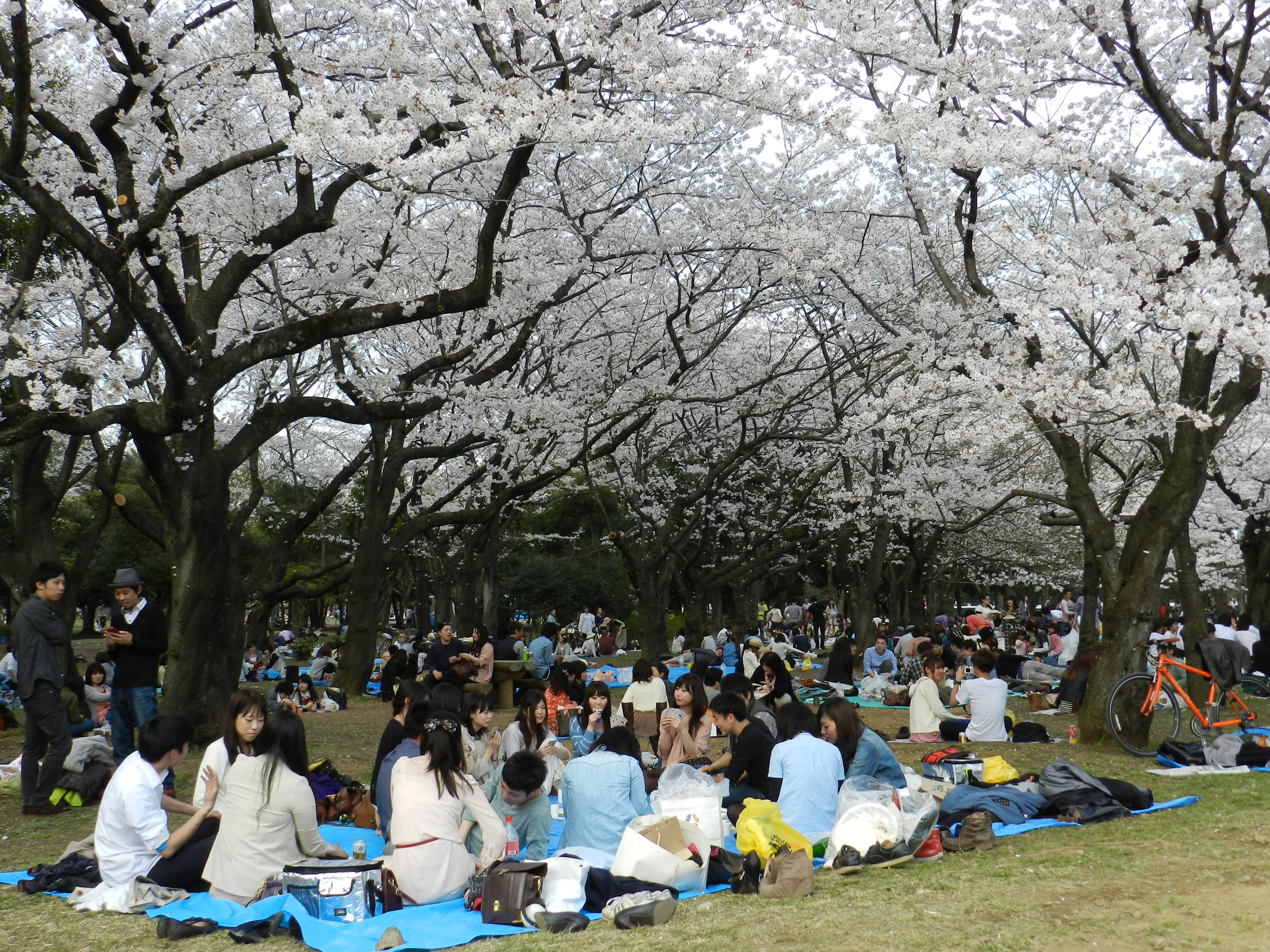
1) It will be crowded. It will be loud. You and the 31 million other people living in Tokyo will all be in the same park at once.

On any given day in Japan, the most populated city in the world is also dead silent. No traffic noise, no honking, just the high-pitched screeching of Ouisar-san yelling at her Offspring to bring the breakfast dishes to the kitchen. I recently complained to my Japanese sensei that I speak decent Japanese, but I can`t understand a word of it- maybe because I can`t hear anyone talking back to me.

Except during Hanami.

Every person in Japan abandons ship, drops all scheduled activity at the first ear drum shattering pop of a cherry blossom, snaps the blinds shut, hangs the “Closed” sign, buys a bottle of sake and a bento and trains, bikes, walks, hops, limbos, pogo sticks or uni cycles toward the cherry blossom viewing spot of their choosing.

Just like a feast fit for a Dr. Seuss banquet, most bring at least one of their clang clangers, robot bing bongers, heli pod pounders, and any other assortment of the loudest instruments banned by their apartment complex. Add to this mix of pitifully played loud instruments the sound of 31 million residents rejoicing in various octaves and pitches a cacophony of different songs simultaneously sung and any visitor can follow the pandemonium to the cherry blossoms without having a map of the exact location.

2) There`s not enough room for 31 million people under the cherry blossoms.

A mentality exists during this time which is very un-Japanese- no more

” You first”

“no you first”

“no really, you first”

“I insist- you first,”

For Hanami only, a rarely seen behavior is observed.

The Japanese prefer not to resort to such tactics and have employed a very effective alternative.

3) Get There Early or Send the New Guy

On April 1st of every year, the most recent class of college graduates all start their new jobs. This particular date was set many generations ago so the new recruits can go to the cherry blossom viewing site of the company`s choosing and hold a spot until everyone else gets off work.
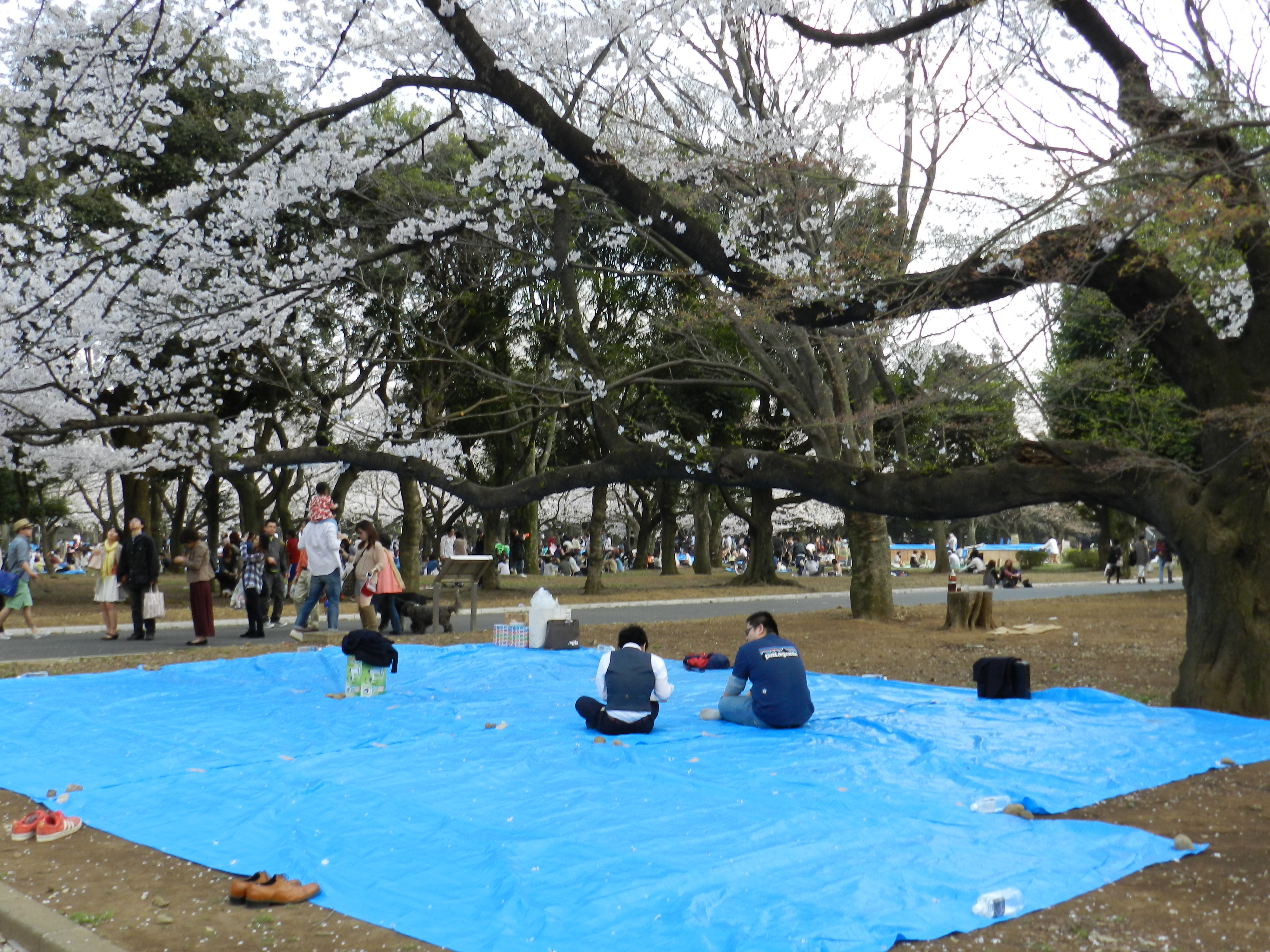
This spot is guarded closely by the junior team. This father thought to use his toddler-aged daughter as a decoy for encroaching upon the site however, one of the top-notch recruits spotted the juvenile ploy immediately.
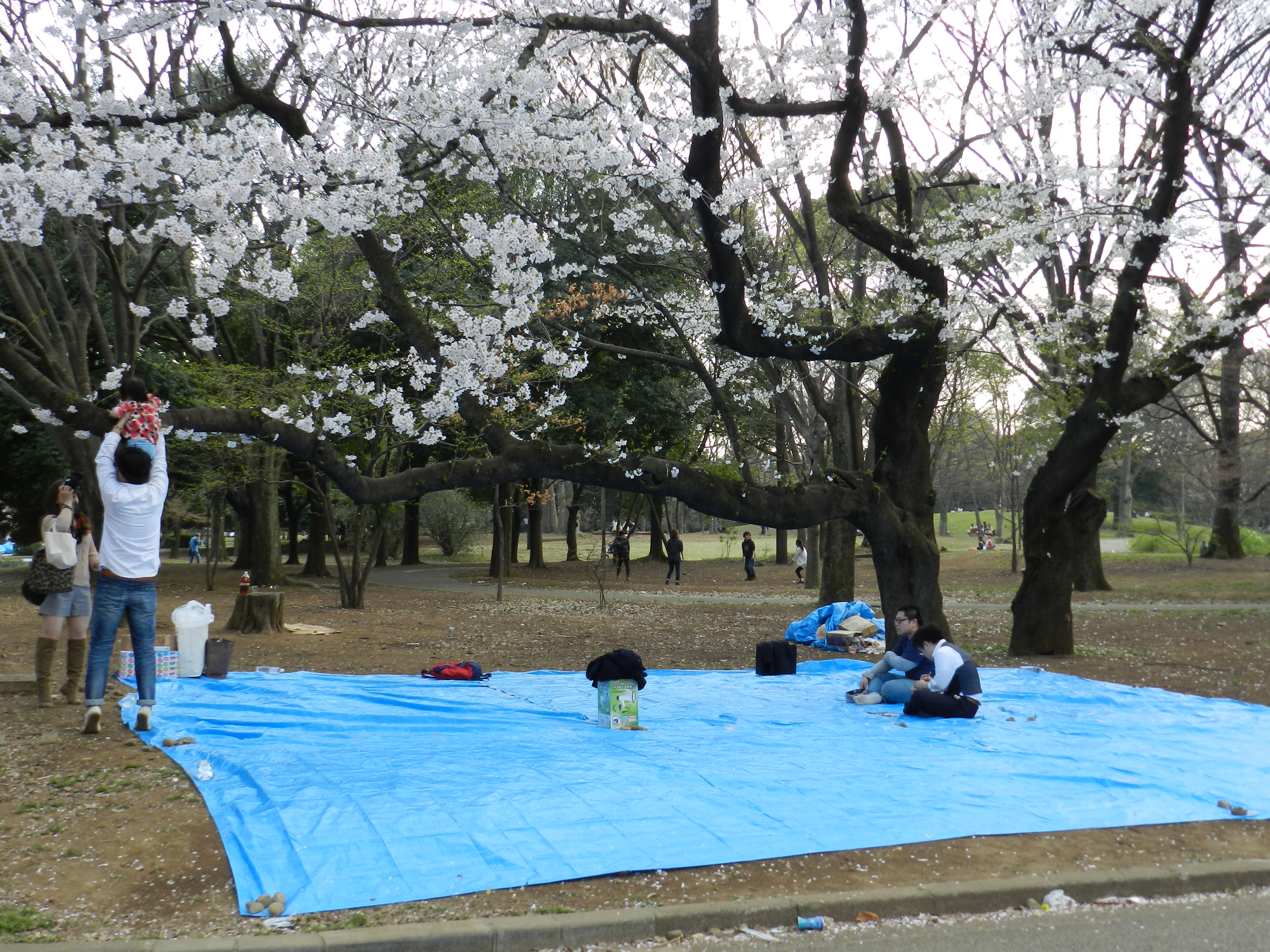
Others ensure that the spot is safe from intruders by placing heavy items of food in the middle and roping off the perimeter. If necessary, rocks are either thrown or used to beat invaders.

4) Window shopping

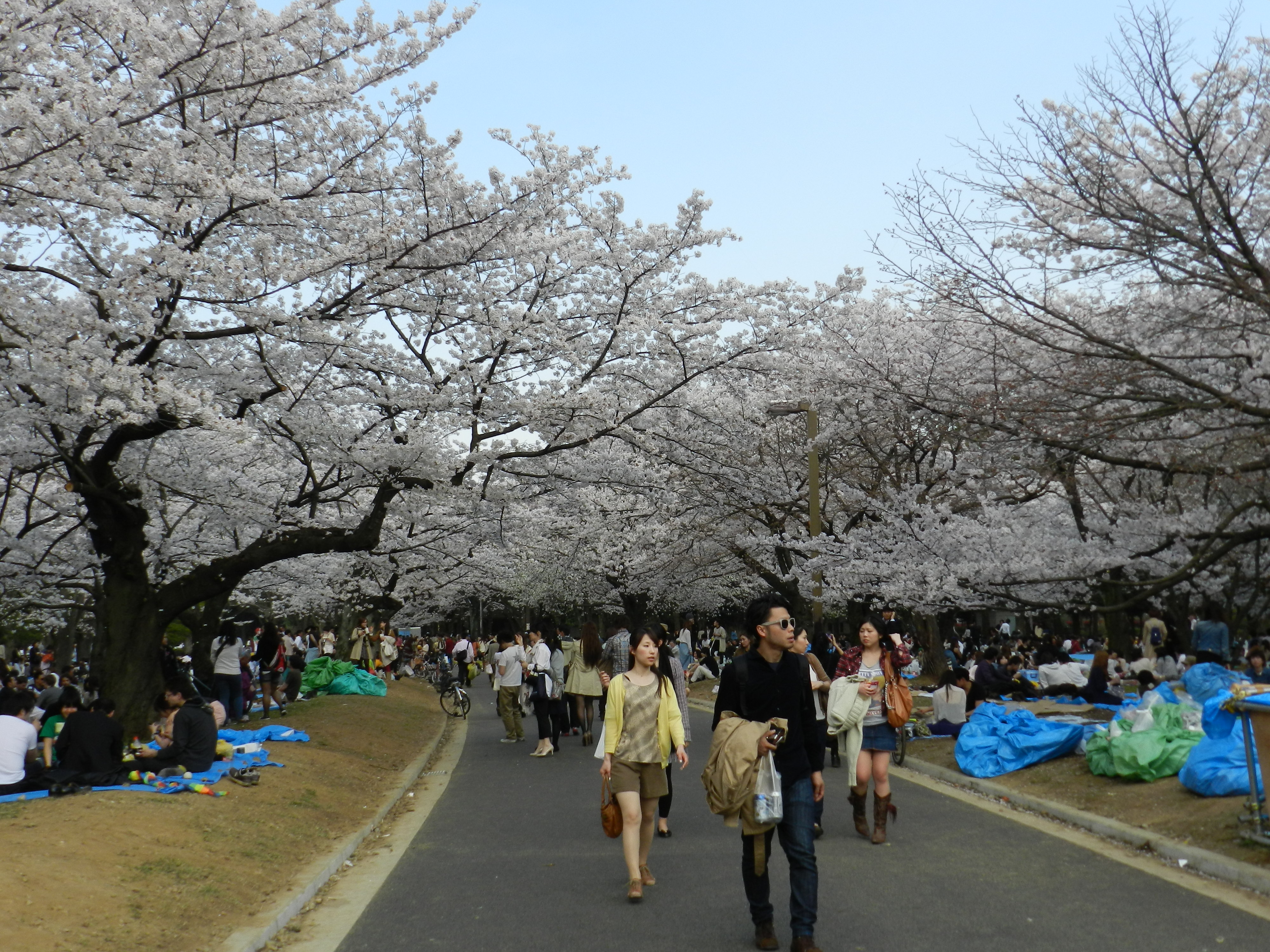
Arriving late without  a spot can be solved by scouting for an entertaining crowd in one`s best outfit. A snappy outfit and along with an “I`ll add entertainment value to your tarp” attitude may result in an invitation to join.
4) Cherry Blossom Season Coincides with Allergy Season

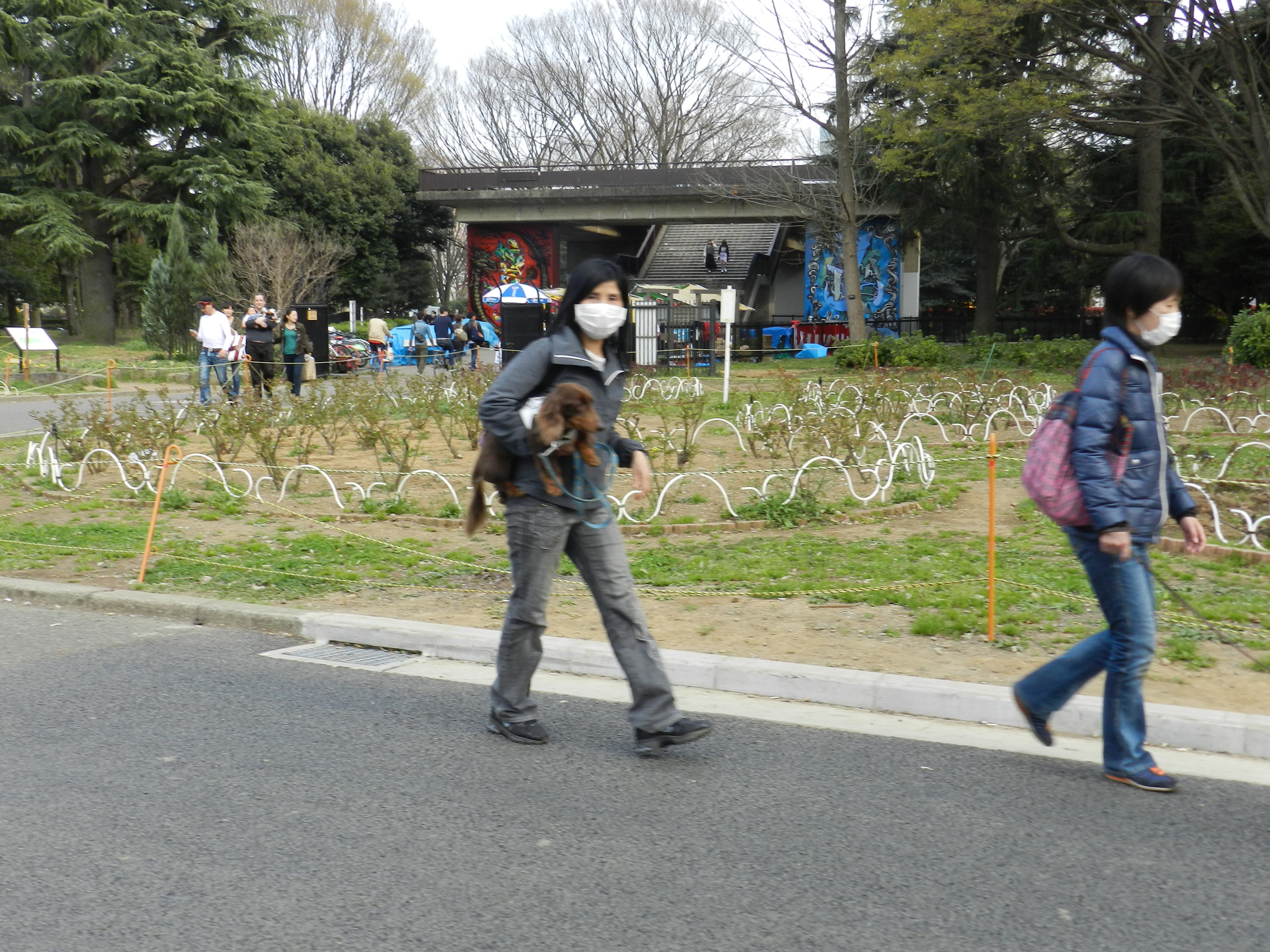
For dogs. We all know that washing hands can prevent the spread of germs and allergens.  Although many parks contain water fountains, it`s advisable to carry your dog to prevent the monotonous repetition of washing 4 paws.
5) Please don`t Dump the Kids` Hormone filled milk on the Ground

It`s causing the trees to develop pre-maturely.

"Throw me somethin` mister!"

6) There are Many Places to Enjoy Cherry Blossoms.

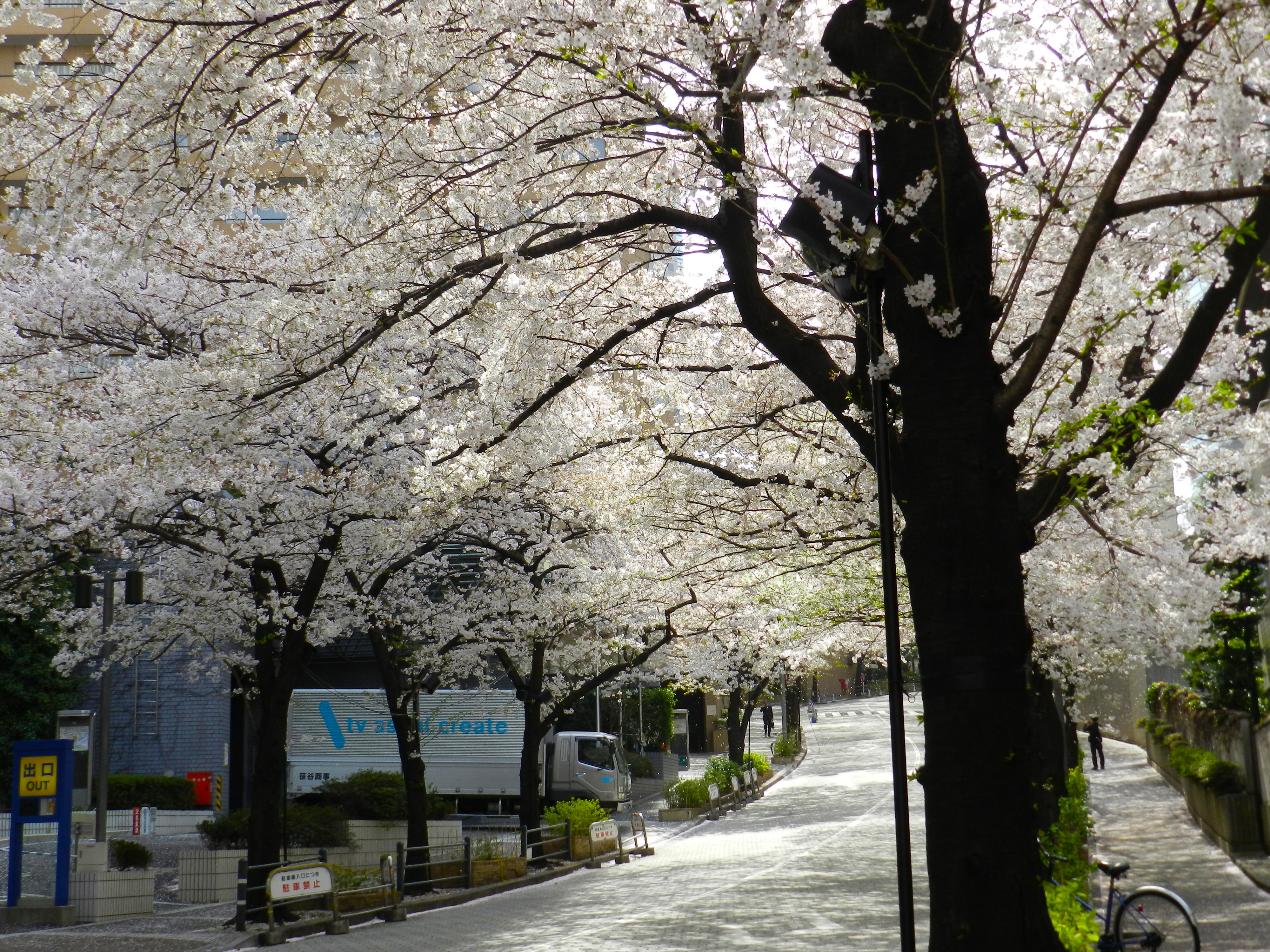
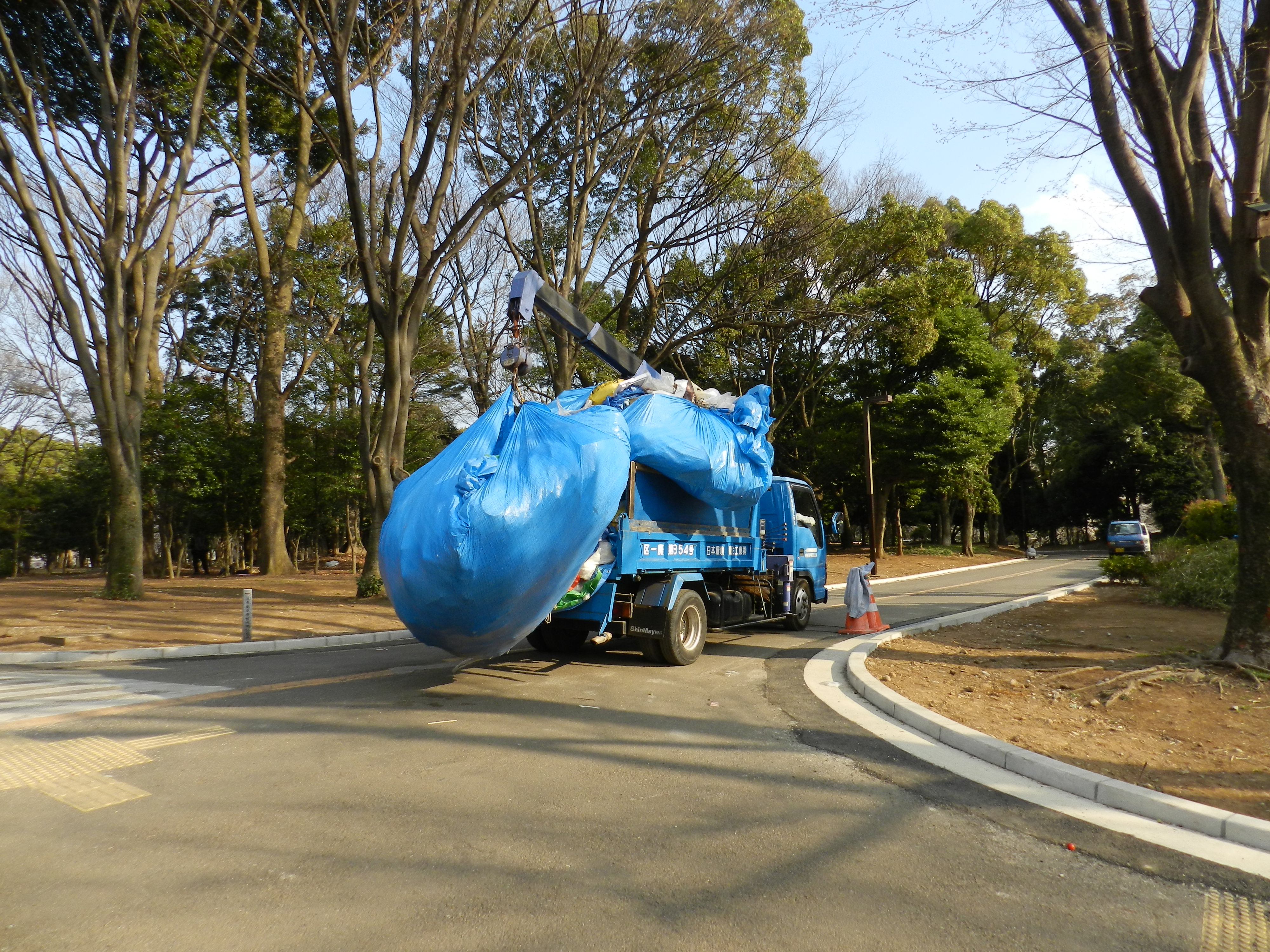
These truck drivers have a wonderful spread inside the cab complete with alcohol free sake and Costco sushi. When I passed they were enjoying a post lunch siesta.
Spouse is a multi tasker. Therefore, he goes to Yasukuni Shrine where he can view cherry blossoms and his favorite sumo wrestlers at the same time. I was thrilled to hear he and Andretti-san were picked out of the crowd by sumo scouts as potential recruits based on the way they threw rival onlookers to the ground when storming their way to the front for a closer look.

Baruto and Hakuho
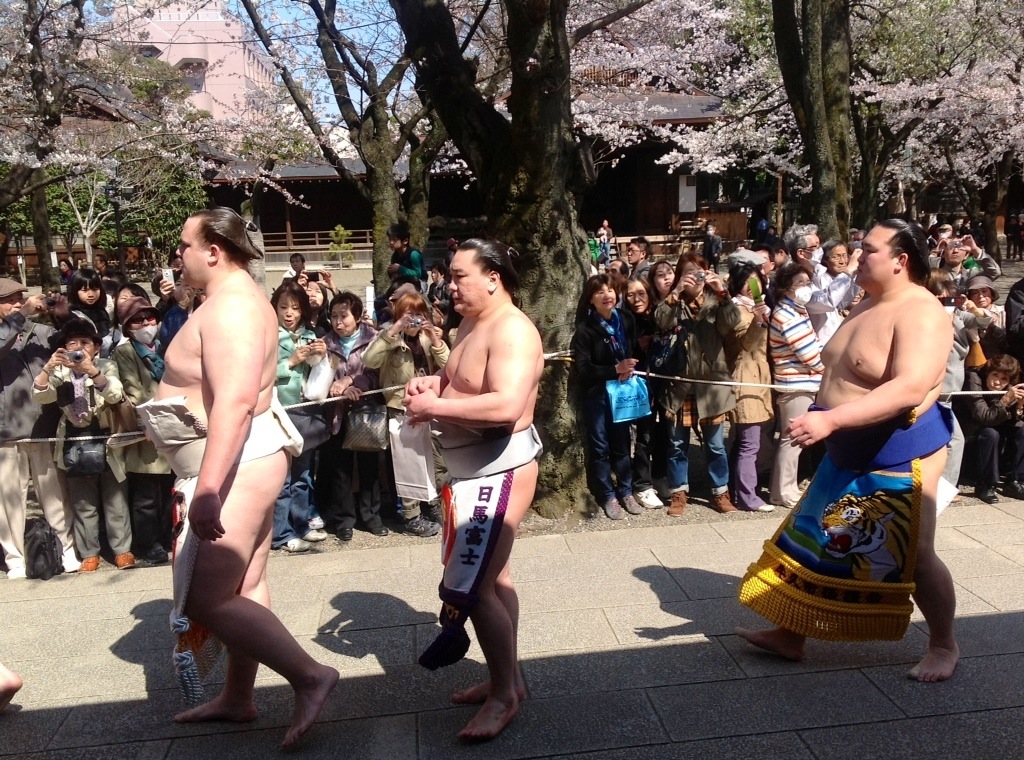
Baruto, Harumafuji, Kisenosato

7) Bag your Garbage!

I`ve heard those big bags are sold at Costco.
Follow these rules and you`ll blend in like a native.
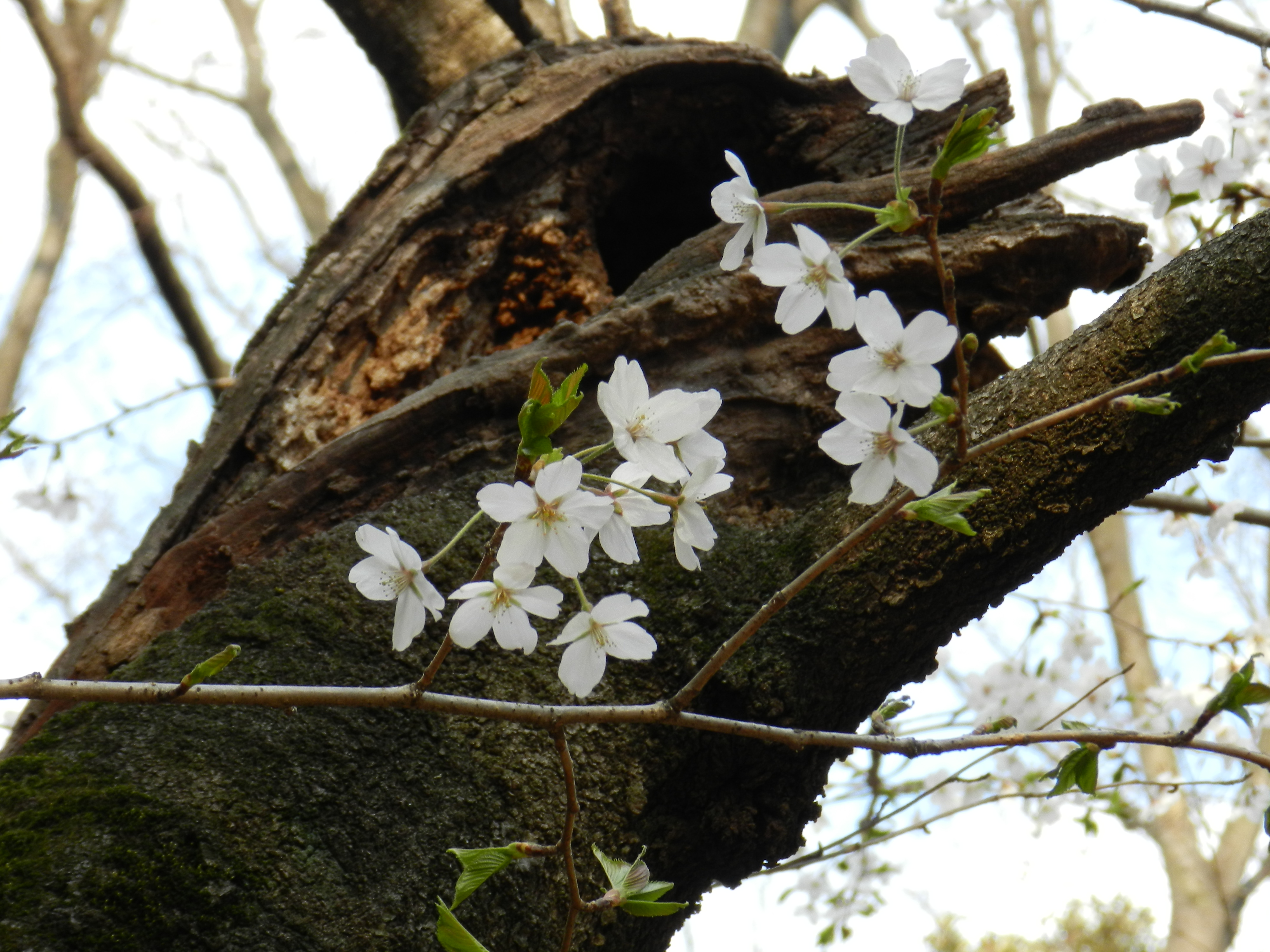
How can a tree that always looks as if it`s dying consistently surprise me when it miraculously sprouts blossoms out of nowhere?

Well- that`s the end. Of the Cherry Blossoms.

Every single town where at least two people reside hosts some sort of annual celebration for which it`s famous- and maybe even there`s a queen of said festival. What causes the folks in your town to shut down the post office for some hootin` and hollarin`?

Posted in Moving to Japan | Tagged , , , , , , , , , , , | 38 Comments

A Stroll Through The Cemetery During Sakura Season

I am possessed by a morbid fascination with cemeteries. I`ve pin pointed its genesis to the stories told at my Grandfather`s supper table about the flooding of Elba, a small town in south Alabama. He sat on the roof of his boyhood home and watched coffins bob down the flooded street- many of them containing his relatives. I always hoped the story would end with one of his great uncles, the civil war sheriff, hopping out, pistols primed, pissed and ready to fight. The finale couldn`t have been more disappointing:

A mere phone call- “Dan, we`ve got your Daddy and a cousin down here in Opp. They`ll be here when you can come get`em.”

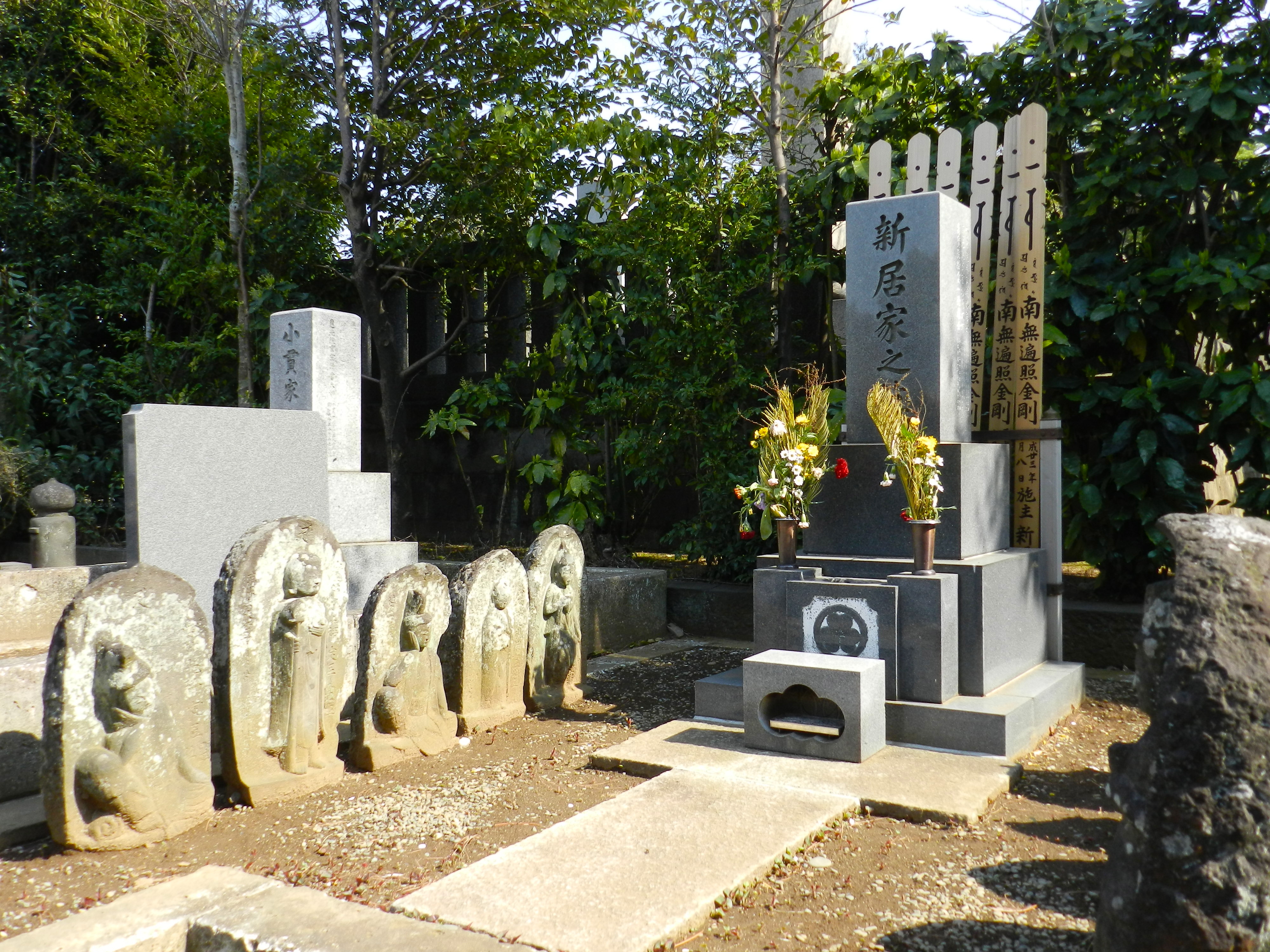
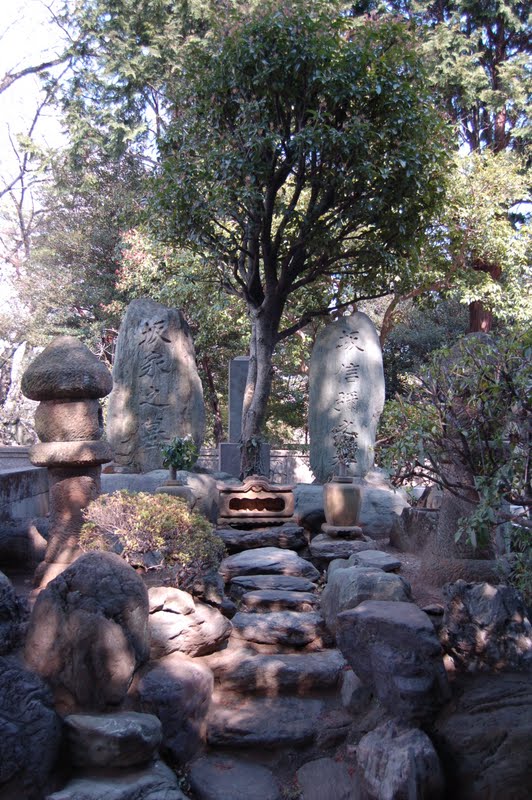
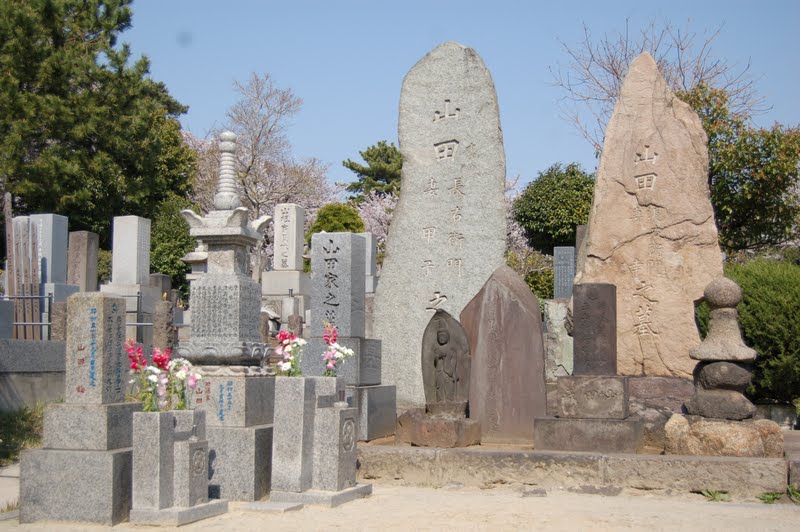
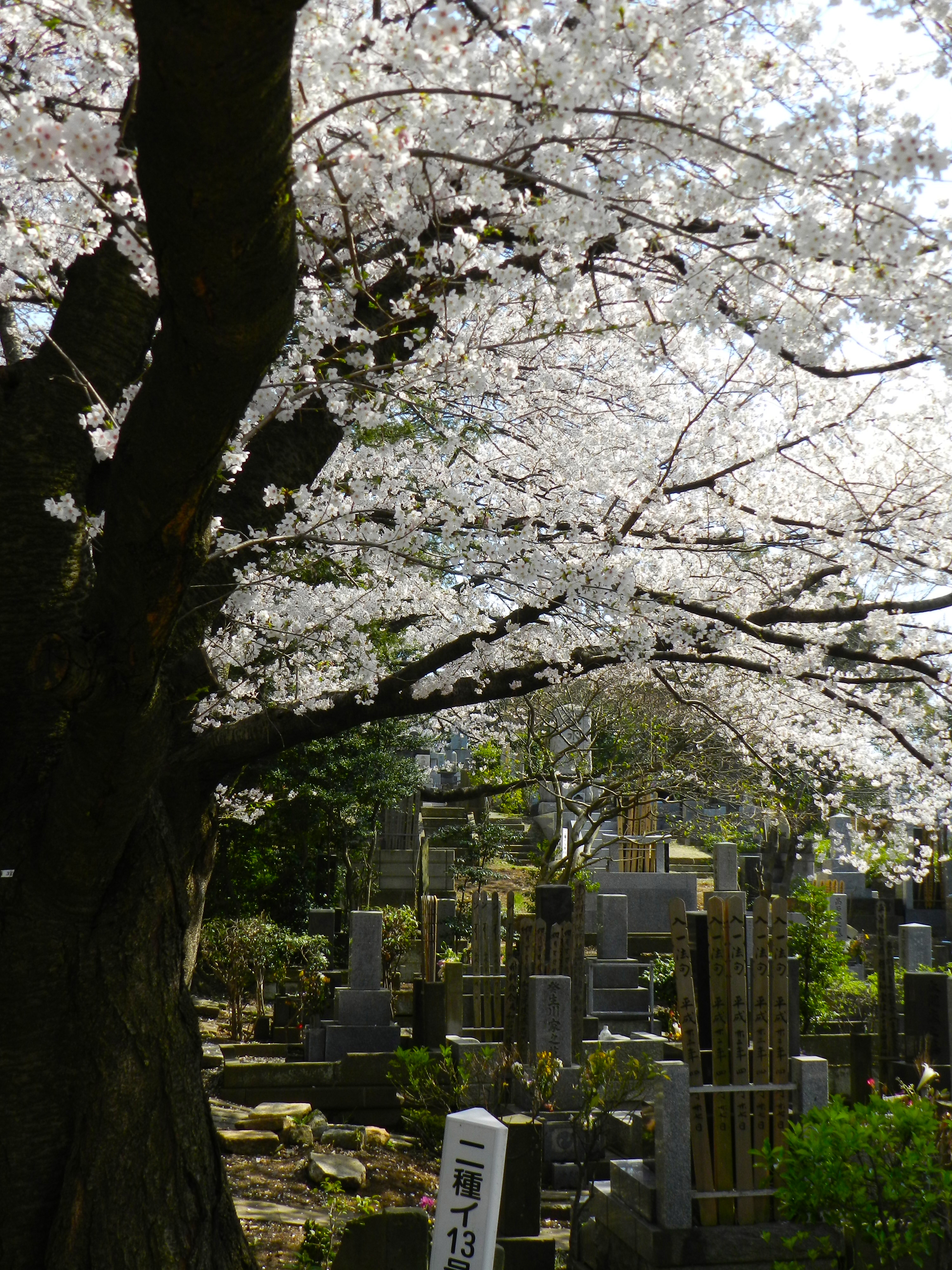
I`ve been pining for an excuse to dig around a Japanese cemetery for months and Sakura Season-(Cherry Blossom) provided appropriate cover.Cherry blossoms burst forth during the first two weeks in April and if no rain or wind blows them off the tree, they cause a botanical frenzy of viewing parties and outings accompanied by bento boxes and sake. Surprisingly, Aoyama Cemetery, the location of these pictures, is a prime spot for viewing.

Sakura season in the cemetery provides quality time for many Japanese couples looking to rekindle the flame. Little does he know she wants it nice and clean before she tosses him inside when no one is looking.

If ghosts exist, they are everywhere but Japan for the people take special care to make sure anyone intent on sticking to their old stomping grounds moves along. At death, a bowl of rice with a pair of chopsticks stuck upright in the middle is set by the deceased`s head. The chopstick`s placement indicates this is a “to go” lunch and is a friendly reminder to the newly deceased that they are in fact, dead. Because of this practice, placing one`s chopsticks upright in a bowl of rice while dining in restaurant in Japan will cause several reactions- none of them positive. On the pro side of the cultural faux pas equation, it will remind any dead patrons in the area to vacate pronto.

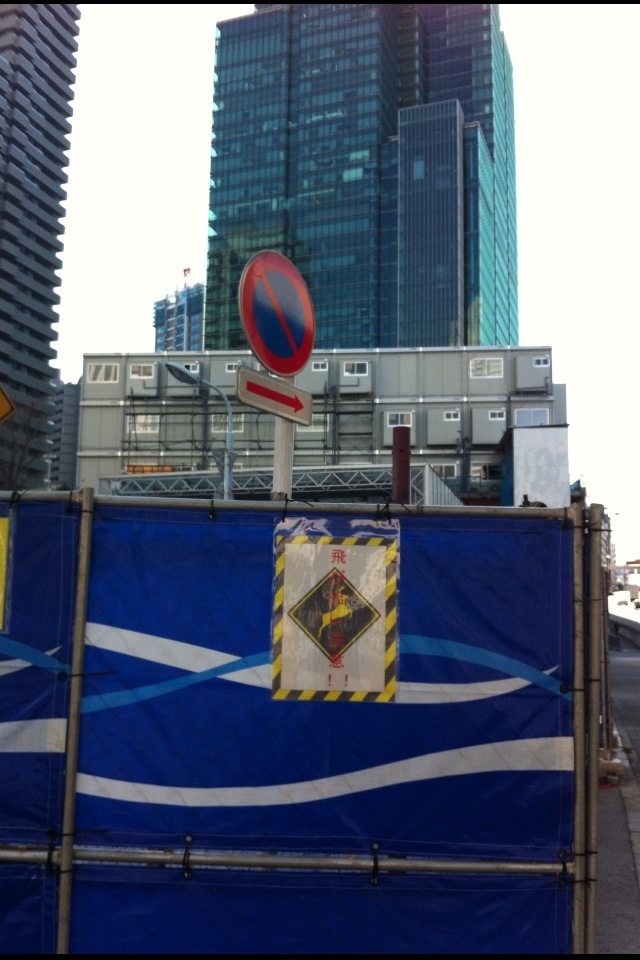
Many Japanese keep small Buddhist shrines in the home. At the time of a person`s death, the shrines are covered with paper. This practice keeps the spirits from returning. Aunt Fumiko-san will probably not make it across the threshold to see the shrine however, because two salt tablets will have been placed on either side of the front doors to bar her comings and goings. I`m guessing that`s why there are rampant salt-licking deer running around Tokyo causing this warning of their presence on a construction site.

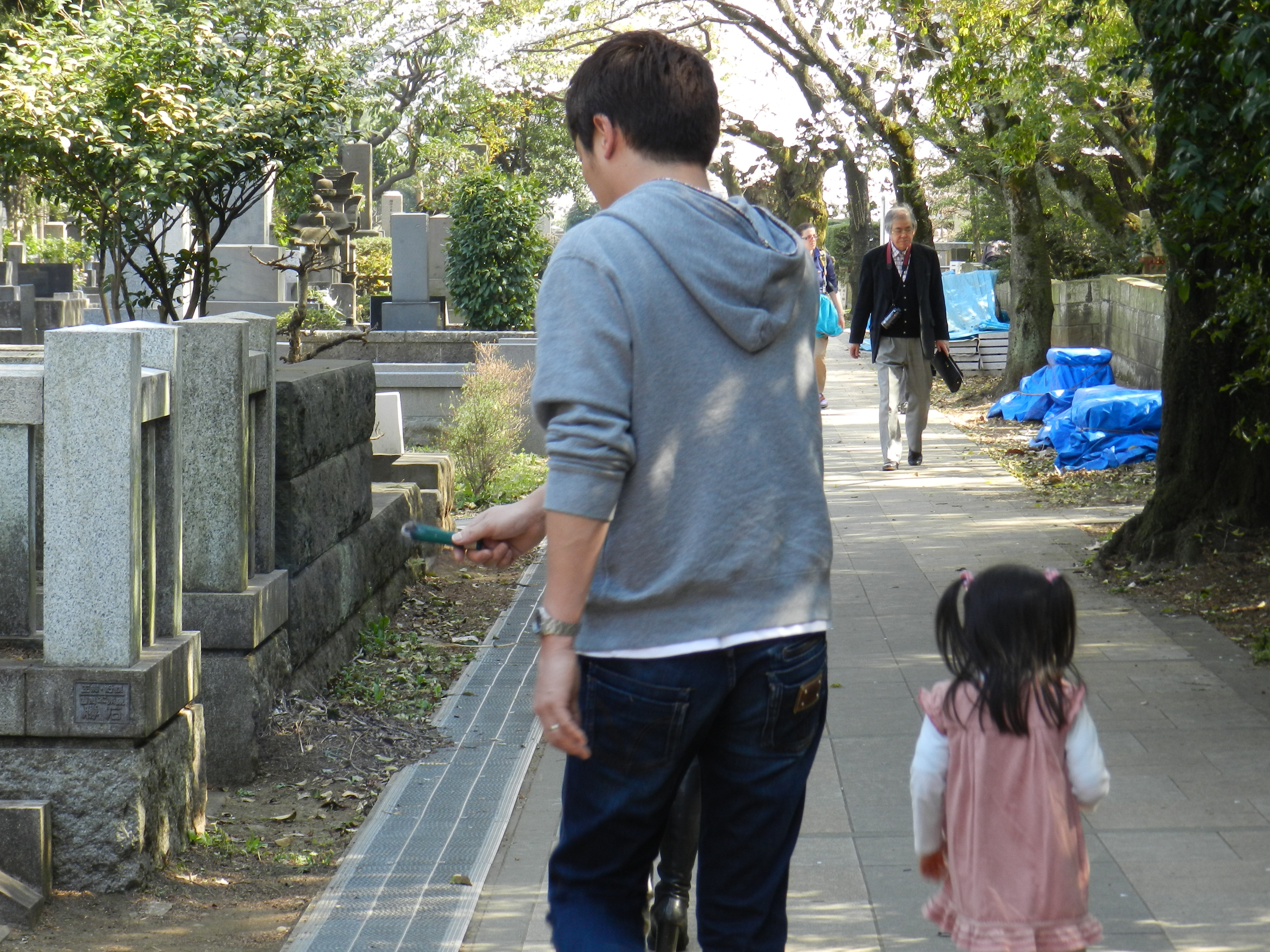
This man and his daughter were indiscriminately waving incense at both the permanent and non-permanent residents of the site. Maybe welcoming a new resident.

There is a saying in Japan that Japanese are “Born Shinto, Married Christian, and Buried Buddhist.” Most Japanese are buried Buddhist and cremated. Several tombs have drawers for easy access to ashes as multiple generations are interred in the family plot. Critics complain overly easy. In the past, ashes of famous people have been stolen and held for ransom. Unfortunately, this cemetery did not have any obvious drawers. I wasn`t going to ransom anyone (although it`s a nice retirement back up plan) but I would`ve liked to get a picture. Of the occupants. Just kidding. It was too crowded.

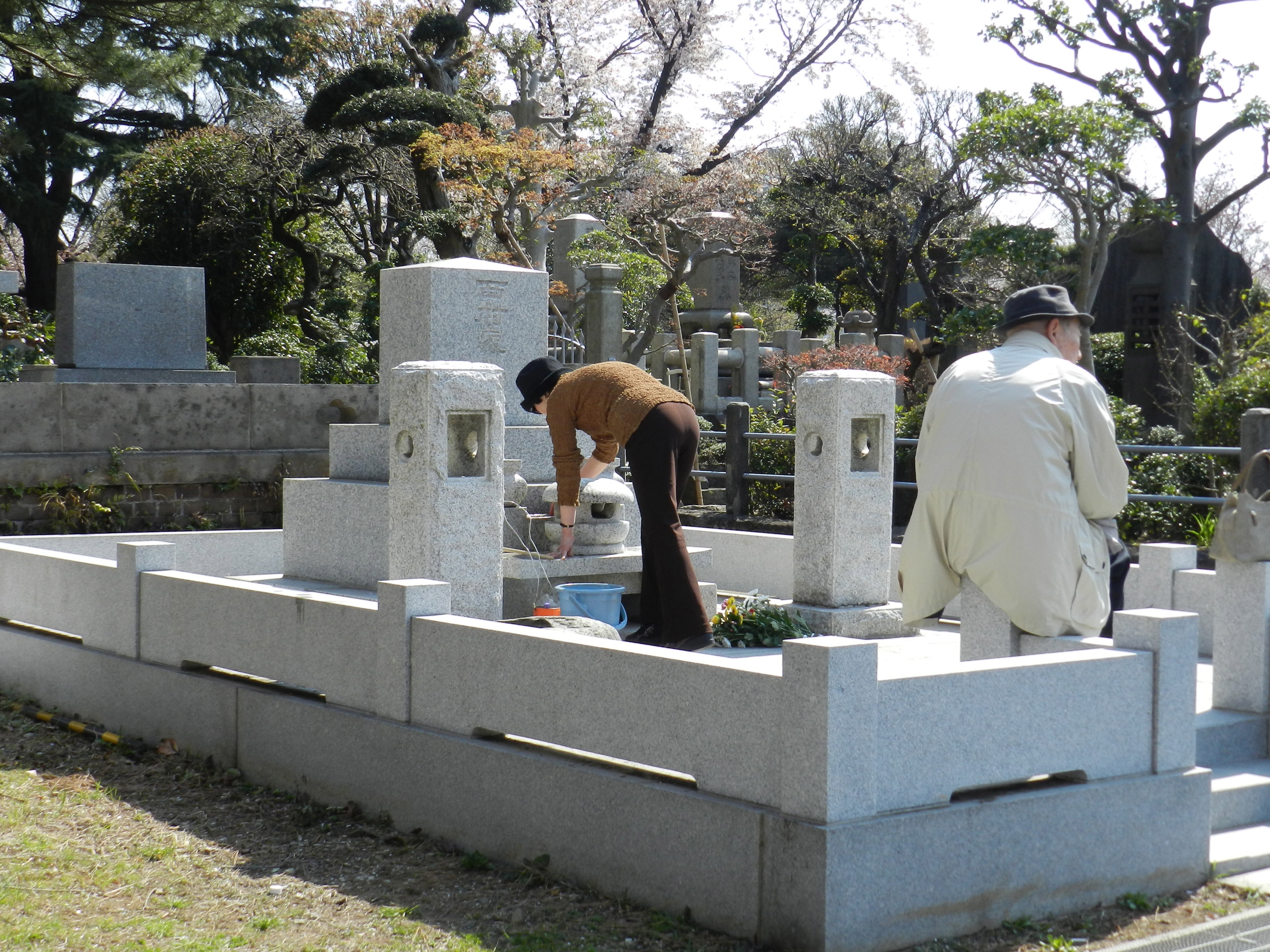
Several of the more elaborate plots had basins of water. My guess is these are for purification.The cat provides an instructional pictorial example.

The round symbol is a family crest. I`ve read that some Japanese tombstones are available with bar codes so visitors can download pictures and anecdotes about the person contained within. This truly appeals to the nosy side of me. Story time in the cemetery. With a cappuccino. Spiteful me would write a new life for myself full of shocking exploits and scandalous pictures for anyone who might stop by for a post- mortem visit.

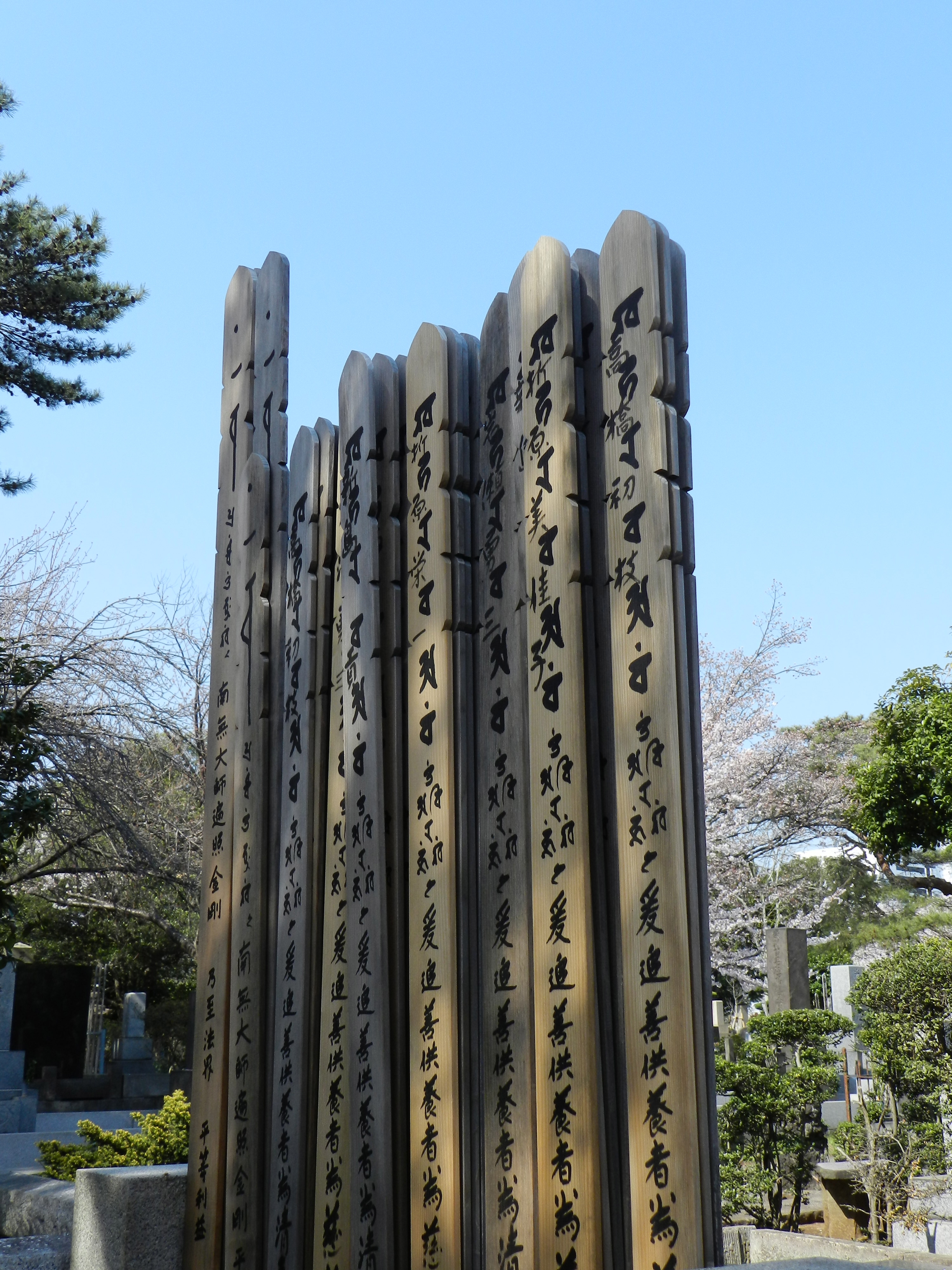
When a person dies in Japan, a Buddhist monk assigns a new name (called a kaimyo) to the deceased which is then printed on the wooden sticks below. (Called sotoba) The cost of this service can be extremely expensive ranging from $5,000- 15,000. The higher the cost, the better more ancient the name. Again, assignment of the new name prevents the deceased from returning should the old name be called. The new name is not likely to slip off one`s tongue as they are similar to, “Honorable Wind,” therefore unlikely a family member will accidentally call them back.

It`s a mixed bag here at the Aoyama Cemetery.

What you can`t see are the lines of cars patiently waiting for me to vacate the middle of the road. Unlike the guy on the left, I wanted the exact center.

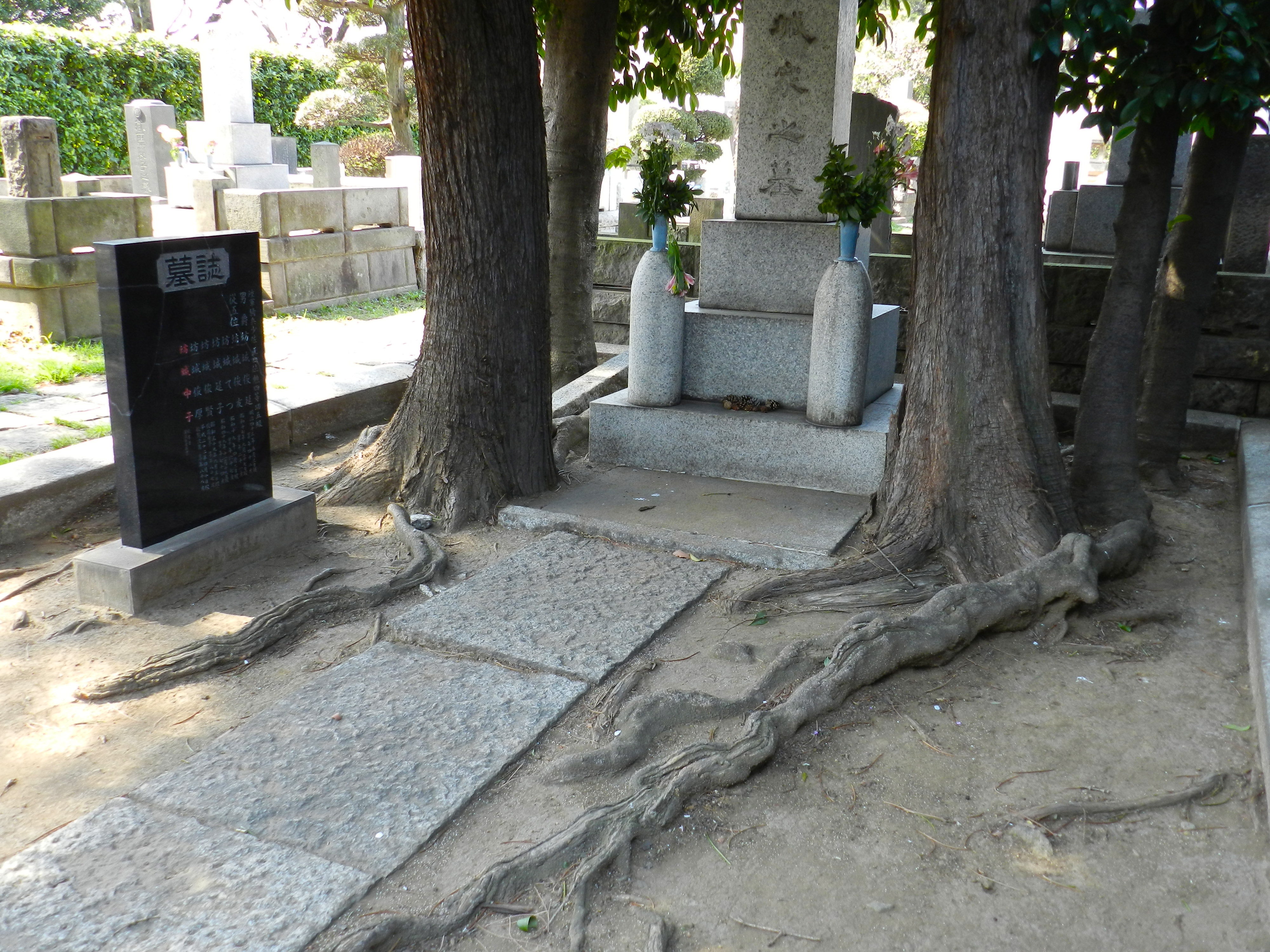
The red lettering on the side of the tombstone below is for a family member not yet among the departed. Apparently it`s much less expensive to engrave once and repaint the letters black “later.”A girl tree. I mean, there`s a girl by the tree.

Size always matters, neh?

I am looking forward to this summer`s visit to one of my favorite cemeteries in Texas – complete with pictures on the tombstones. I feel like I`m visiting old friends.

Anybody got a good cemetery story or picture to share?

Posted in Moving to Japan | Tagged , , , , , , , , , , , , | 23 Comments

Getting Genki with Geisha Clampitt Style

A mini bus commandeered by Andretti-san and packed with invading Clampitts from Oregon squirmed ominously awaiting our departure toward downtown Kyoto as I faced the motley crowd to pose this thought-provoking question-

“Geisha- who are these masked white beauties of traditional Japan?”

Who cares

Sounds boring

Are we stopping at Starbucks

You`re pronouncing it wrong

All teenaged hands grappled with white ear buds to plug out my lecture as I climbed upon the lectern. Andretti-san had to drive but has the mastered the ability to feign interest while  my sister-in-law actually listened. Spouse pulled up Wikipedia to double-check my facts. My brother-in-law requested my delivery in historical fiction format. With pictures.

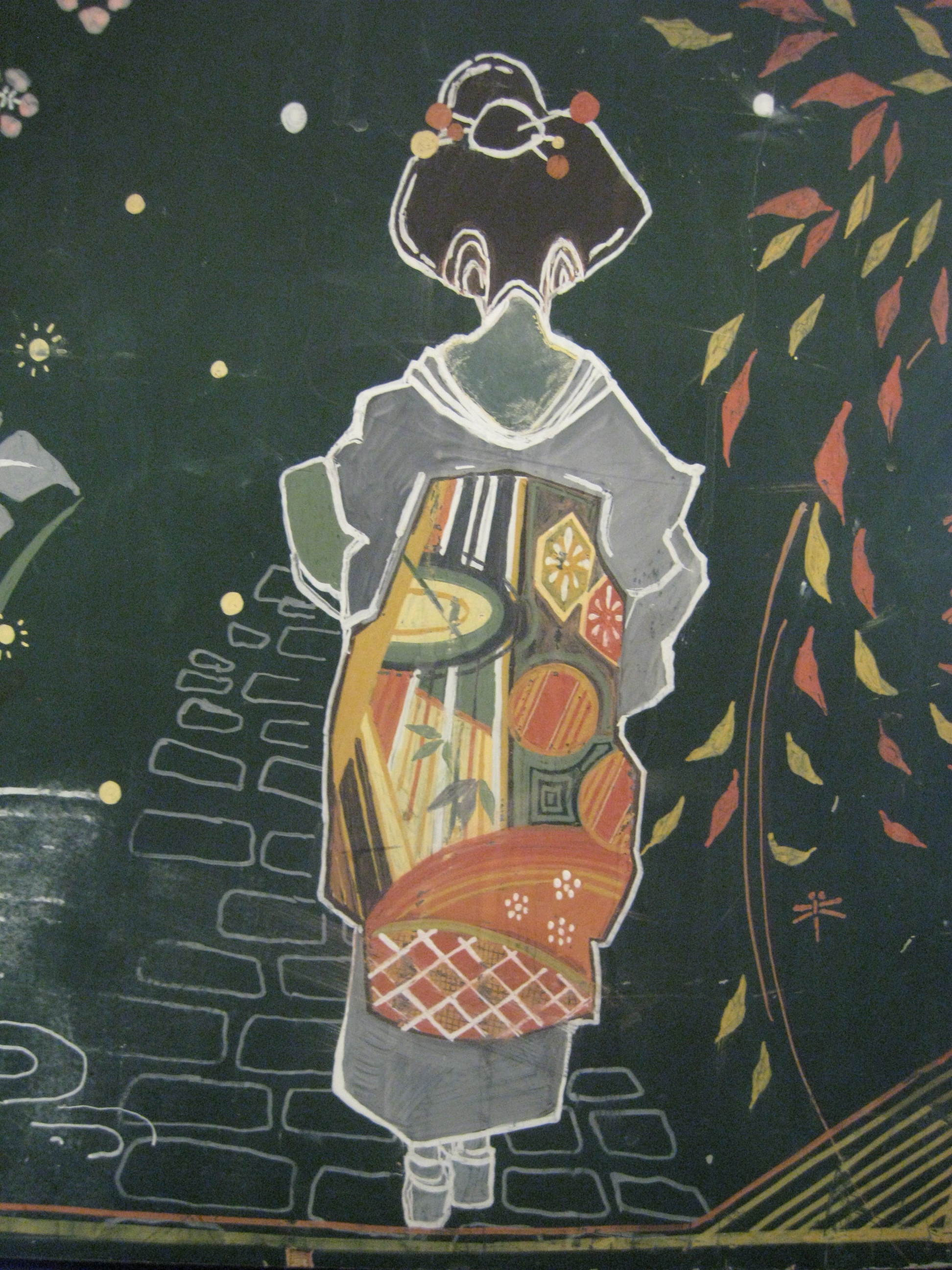
Kyoto is famed for the Geisha and Maiko (Apprentice Geisha) who have entertained rich, male clientele for centuries. After 18 months in Japan and several trips to Kyoto, the closest I`d come to seeing one was a drawing in Starbucks.

Artist- unknown Starbucks Barista

In order to optimize our chances of “running into ” a Geisha, we stayed in the Gion district which houses the elite of the Geisha community. One thing I knew from experience, 9 of us peeking in the windows was not a viable option.

But I had a plan for seeing Geisha which did not involve walkie talkies and bungee chord. A plan sure to be so unpopular, so guaranteed to produce screams of protest, I had not informed the covey of its imminence. I laughed on the inside just thinking about it.

We were going to see real Geisha- not the fake ones like those in the movie “Memoir of a Geisha” who in addition to being Chinese only resembled Geisha by wearing a kimono.

So, really, who are they?

“Gei” in Japanese means art and “sha” means doer or person who does. Maiko, the apprentice, literally means “Mai” -dance and “ko” -child. Geisha are artisans who entertain clients with dance, music, witty conversation, drama and poetry. The Maiko go to school at the age of 15 to begin training as Geisha. I`m not sure I`d like to play the shamisen but a class in witty conversation would be valuable for many High School freshman and a pre-requisite for the annual company holiday party.

Pronounced “Gay-shah” and “My-ko.”

All have a Geisha mentor called an onee-san-or older sister, who helps teach the Maiko tea ceremony and navigation of the Japanese social networks. (This practice was adopted by  sorority houses in the US as pledges learned from big sisters the art of ceremoniously pouring beer from a keg without creating a foam head.) As Maiko they are associated with an okiya-Geisha house- which is run by an okaa-san. This proprietress pays all expenses for training and clothing the Maiko which is eventually repaid. They become full Geisha at the age of 20. It is considered more prestigious to have been a Maiko prior to becoming a Geisha.

Maiko wear a kimono with a red collar and have stripes painted on the nape of the neck. The nape is considered a very sensual area. Five different hair styles mark a Maiko`s progression toward becoming a Geisha.

Image Credit Frank Carter Lonely Planet

Beauty is pain. The tugging of the hair leaves these ladies with a bald spot. Quite a work hazard or perhaps I`m just scarred from all the hair my mother snatched off the top of my head at that age. If that isn`t enough, to preserve the salon doo, the girls sleep on a takamakura surrounded by rice. (We were such babies to whine about sleeping in rollers and coke cans back in the day) The rice sticks to the hair in the event of midnight cheating.

Geisha wear wigs. A perk of the promotion.

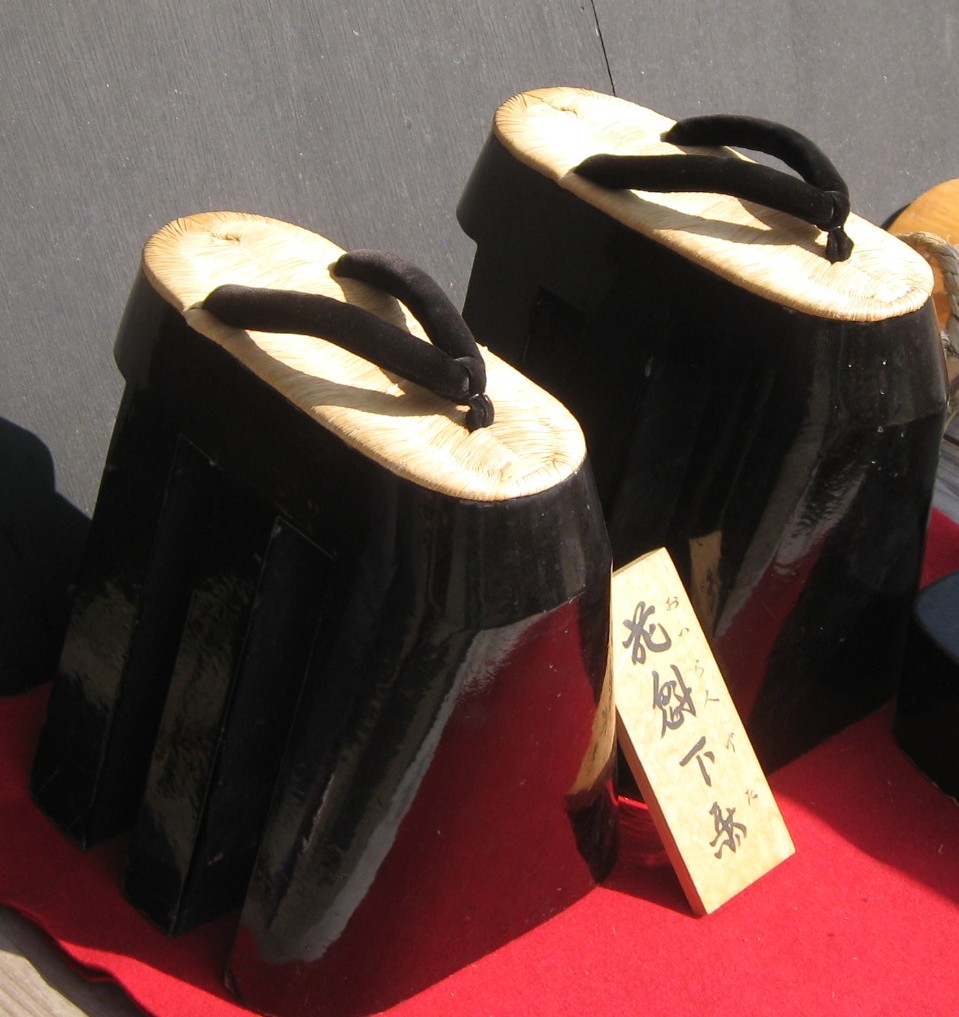
And then there are the dress shoes….

I don`t think my legs have this much height.

Geisha are hired by wealthy men or highly placed business men, owners of companies, and politicians as entertainment during dinners where business is conducted in the traditional Japanese style. The Geisha earn about $1200/hour while the accompanying Maiko earn about half that. Typically the Geisha will go to 4 to 6 engagements an evening and work 6 days a week.

And to answer the big question-

Geisha are not prostitutes.

After World War II, GIs ran through the streets of Kyoto yelling, “Geesha Girls!” Many women painted their faces white and wore kimonos to oblige the GIs however, they were not Geisha. Since then, the Western world has been confused as to the true nature of the Geisha.

Finally, not just any yeehaw and yutz can hire a Geisha or visit a tea room where they entertain. A connection to the okiya going back a generation or two must exist and specific types of introductions must be made. Very few Japanese people have attended a dinner with Geisha. Surprising, but the Clampitts don`t have those connections.

So how did this yutz and yeehaw with a stained sweatshirt manage this?

I felt sorry for the poor Maiko, a rose between two dirty thorns.

The annual kyo odori. During April, the Maiko perform for a short period of time. About an hour prior to show time, I informed the crowd of curtain time. I then plugged my ears with white ear buds to drown the screams of protest, attempts to negotiate a way out, and claims of sudden onset diarrhea.

“Andretti-san- we`re the only foreigners here.” I thought we`d be knees to knuckles with other tourists.

To which he said, “It`s too boring for them.”

Encouraging.

The top of the gallery held the sensei (teachers) while the main area held the audience many of whom were family of the Maiko. Several junior level Maiko sat in the audience. Here I mastered the art of staring to the side while my head was facing fully forward.

What followed was an hour and half of a play most of the group couldn`t understand and a half hour of dancing. My sister-in-law and I loved every minute. This was certainly the easiest route to gawking at Geisha versus the others which involved stalking.

Please enjoy the following pictures I took of my brochure.

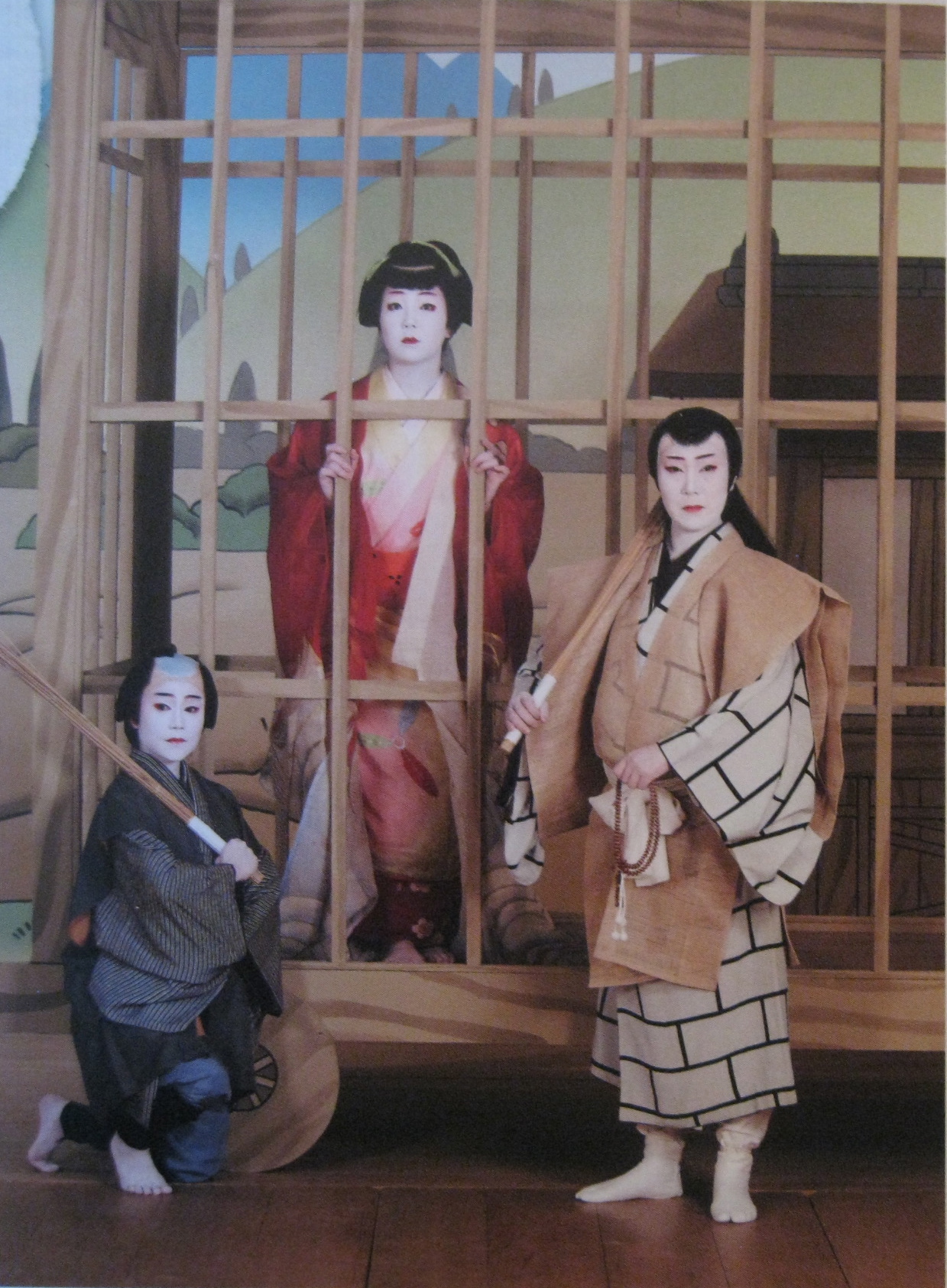
Scene from Play

Two Geisha performed a fan dance.

The Maiko performed a dance with umbrellas.

Geisha are in black, Maiko are in color along the front.

Geisha

Maiko

And finally- a Maiko and Geisha dance while a musician plays the shimasen. Enjoy!

iframe>

http://www.taoistmovies.com/for/

Posted in Moving to Japan | Tagged , , , , , , , , , , , , | 38 Comments

Snow Monsters- They`re Real. Zao, Japan.

Every now and again, I claim my maternal right to say the following words,

“I want to go, so you`re all going.”

Spouse is usually more than happy to comply whereas the Offspring will catapult feeble arguments in retaliation to my proclamation followed by flaming insults toward the location of my choosing. This backlash usually fortifies my resolve that some time away would be good for the hostiles.

The location eliciting the firestorm of burning barbs of criticism was Zao, Japan, located in the Yamagata prefecture. (West of the famed Fukushima)

Ed`s Photos Of Japan

The hook attached to my lip was the Snow Monsters- Juhyo in Japanese.

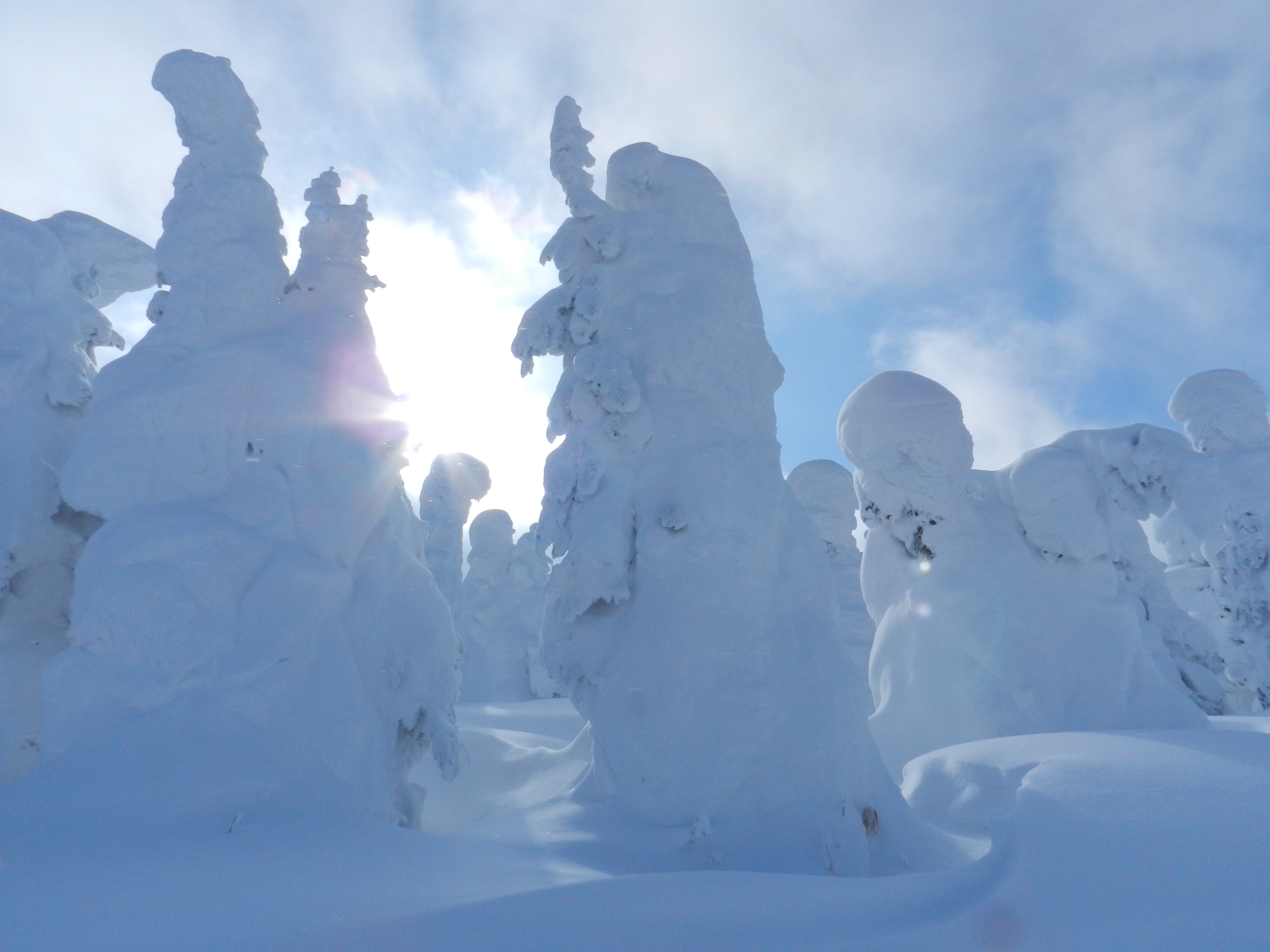
These monstrosities only appear during the month of February due to weather conditions blowing in from the ocean making the snow wet and heavy. This gluey, goopy snow sticks to the trees at the highest elevations enveloping them from top to bottom transforming in to giant snow monsters bowing over to grab skiers flying by.

On Wednesday before our Friday departure, Spouse threw the work card and Offspring #2 claimed pressing social engagements – a dance and a sleep over leaving just Offspring #1 and me. Although the snowboarding was heralded as more cellar than stellar, he would snowboard on a 3% incline and a dusting of snow. Even the looming “threat” of Fukushima couldn`t keep us away. I get more radiation from my super sonic frizz fixing hairdryer.

OS#1 and I arrived at our hotel located at the base of the lift to the Snow Monsters. Based on our reception, Zao is not a frequent haunt of Western tourists.The man at the front desk greeted me as we walked through the door. “Konbawa Ouisar-san!”

It was late so he advised that we go to dinner before viewing the snow monsters. Presented in Japanese style, it was served in one room with all guests eating a set menu.

“Konbawa Ouisar-san” The hotel staff were all greeting by name- on sight. This was to become a pattern wherever we went as news of our Western presence became known. We were famous for a weekend.

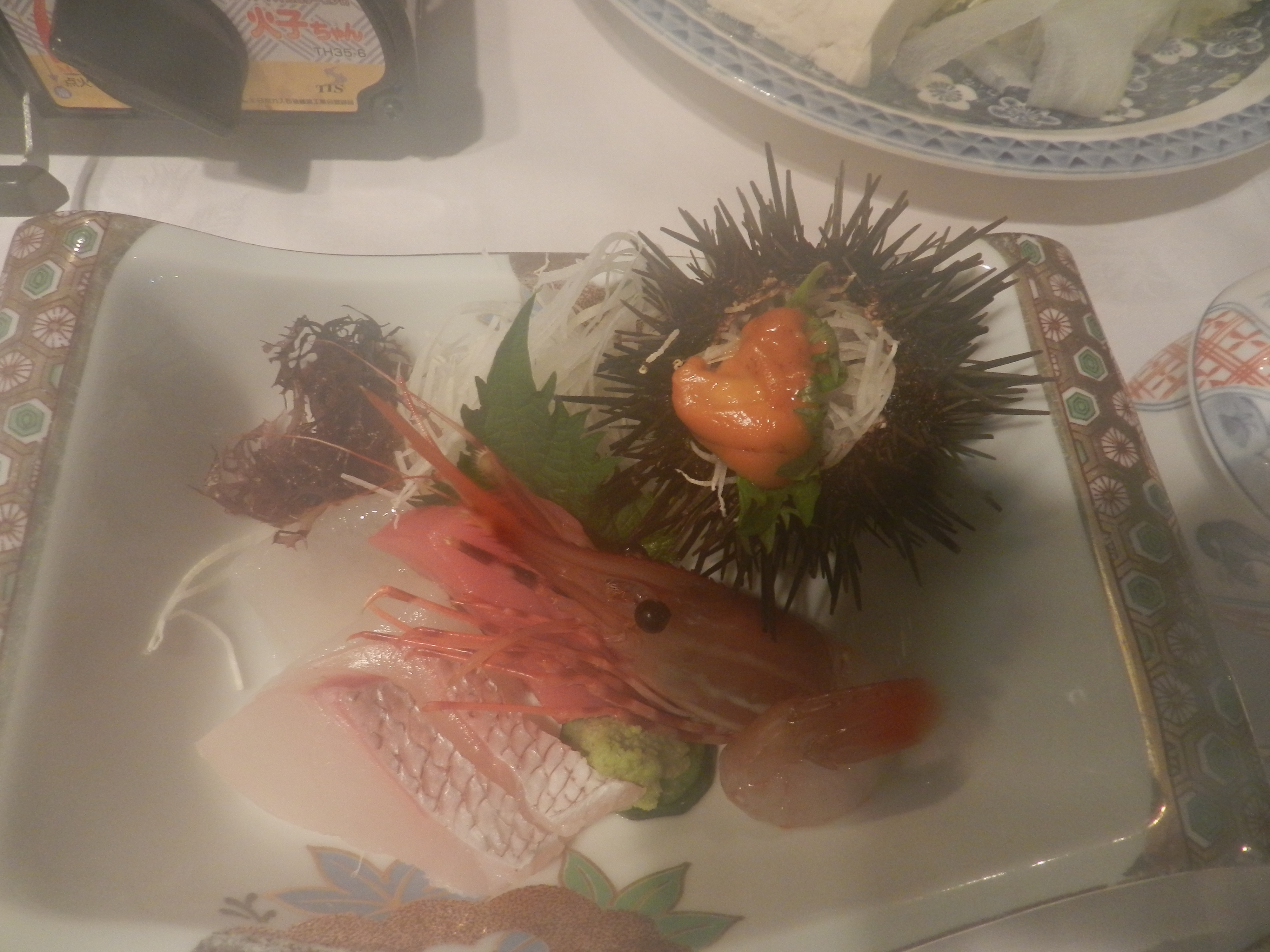
The first course arrived-

We were thrilled with our dinner. OS#1 and I had never eaten uni (Sea urchin) out of the shell. Possibly over exuberant, and potentially louder than the other patrons- taking pictures etc., all the other diners turned to watch us “enjoying” our dining experience. They must eat uni out of the shell every night.

As soon as was polite, we charged out to the lift.

During the month of February, a lift takes walkers, skiers and snowboarders up to the Snow Monsters where all are allowed to view during the day and night.

The weather was bad the two nights of our visit which did not provide good picture-taking opportunities. However, I highly recommend this location for a horror movie or desolate winter scene to all of the famous movie producers reading this blog as it is truly one of the spookiest places I`ve ever seen.

Antarctica must be tropical in comparison.

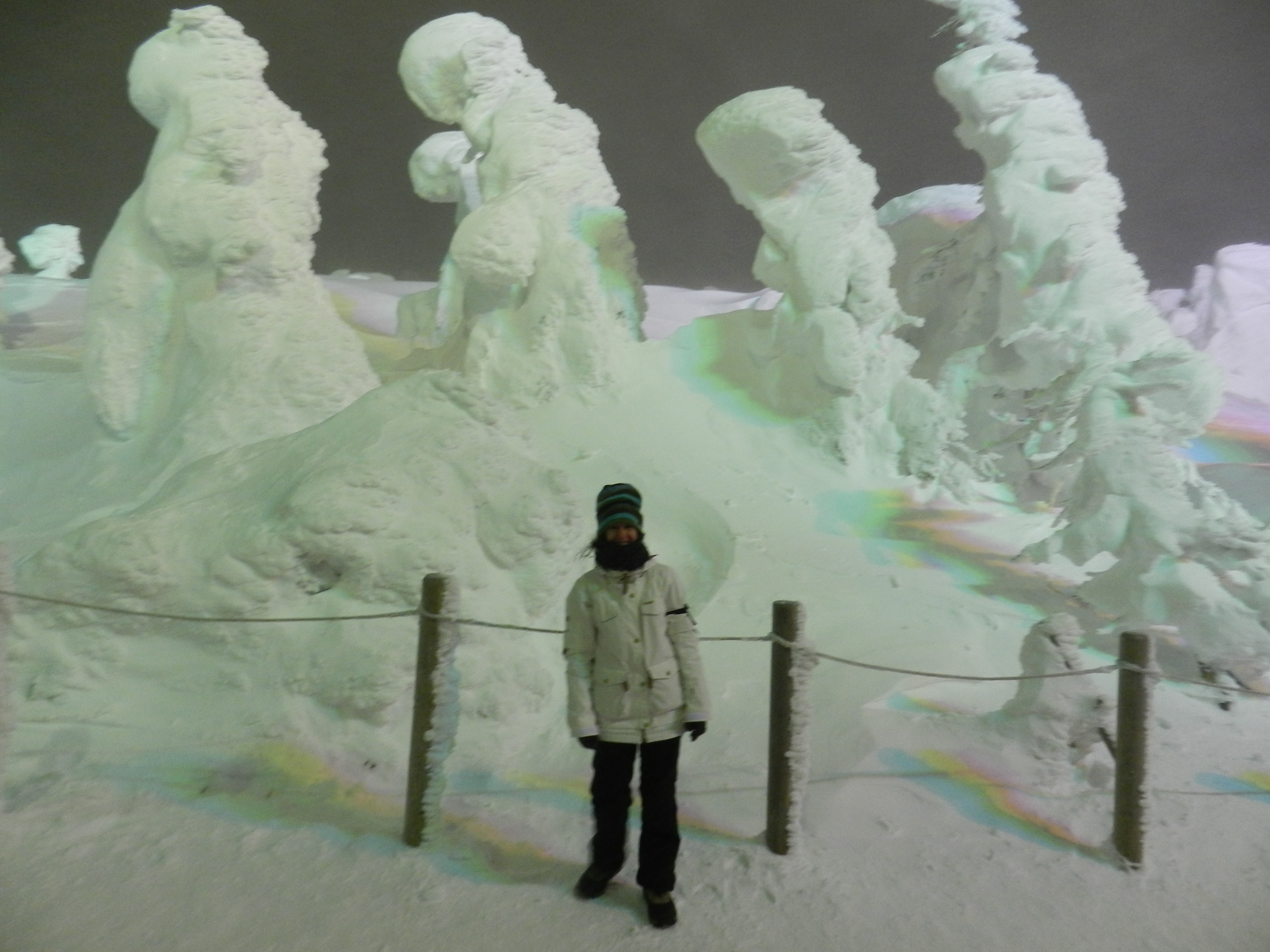
I was not posing for this picture, I was frozen mid stride. OS#1 had to chisel my pants at the knees so I could walk back inside.

The next day was beautiful.

We found this Buddha who had been hidden the night before. When not snow-covered, he sits in lotus position flanked by 4 other Buddhas. The wind has blown his nose to the side of his face.

The exposed part is about 5 feet tall.

The skiing trail through the snow monsters is behind OS#1. The gondola taking skiers and walkers can be seen in the background over the snow monsters.

No matter how many times I threw objects of varying sizes at the tree, it would not dump its snow on OS#1. Very disappointing.

OS#1 kept saying “Mom- you stink!” to which denial is the only appropriate response no matter the situation. We soon discovered the source.

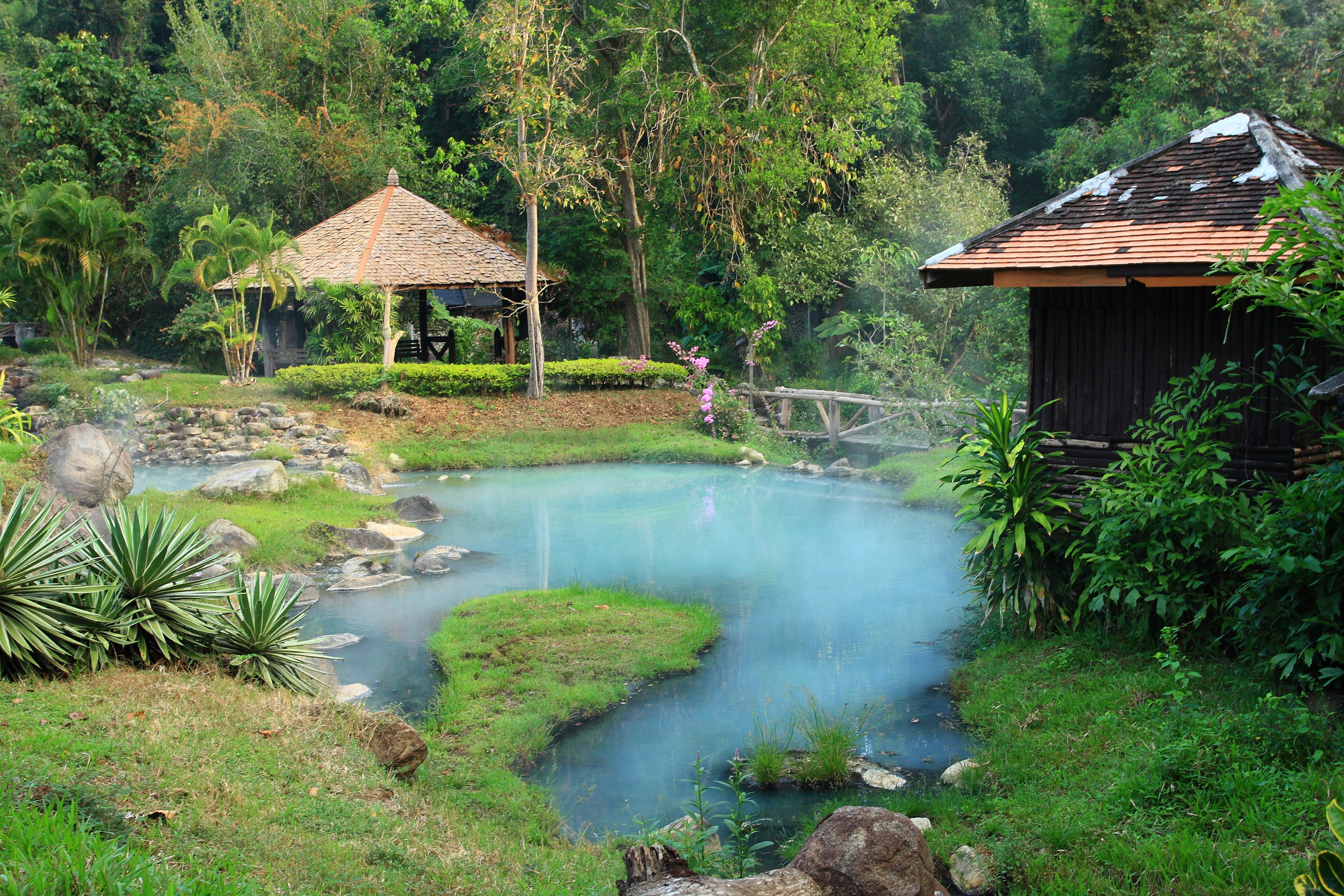
A scenic, yet odiforous onsen. Rumor has it that its strong smell indicates superior healing qualities. Zao is equally famous for the beautiful onsens.

Of all the places I`ve visited in Japan, this is on my Top 5 list. Many of you know that I`ve been whining that my new camera was among the Top 5 worst purchases I`ve made – highlighted by the pictures above. However, a wonderful article accompanied by stunning shots of Zao and the Snow Monsters was written by Lisa Jardine and Hilary Wendel for CNNGo.com- Please get all the details for travel and see the Snow Monsters in all their glory below.

Read “Japan`s Weirdest Snowscape: The Monsters of Zao” Lisa Jardine CNNGo.com Here

Posted in Moving to Japan | Tagged , , , , , , , , , , , , , , | 35 Comments

Snow Monkeys- Karmic Cuteness

While the rest of the world celebrates the Year of the Dragon, the Clampitt clan has been in a parallel universe celebrating the Year of the Monkey. Primates, those in addition to the hairless version in my family, have participated in most of our family vacations throughout the past year. Orangutans, lemurs, (are they monkeys? I`m counting them) macaques of various renditions, and dozens of others I can`t name have blessed us with their howling presence. Having never observed a monkey outside a zoo, this led me to evaluate their presence whereby I concluded it`s my fault. I`ve been abusing monkeys for years- karmically speaking- and now the karmic monkeys are on my back.

It started innocently when as a child I swung from one monkey bar to the next.

In the 70`s I learned that people recovering from heroin addiction wore leather monkey fists around their necks.

My favorite watering hole in college was the Brass Monkey.(Roll Tide)

When the Offspring came along I routinely chastised with,

” Stop monkeying around,” and

“Quit with the monkey business.”

I now sit in the lotus position while I pass along sage advice to my sisters such as,

“Well, if they do it at home, they`ll do it everywhere else. Monkey see, Monkey do.”

A foiled plan results in an eruption of, “Well that certainly throws a %&'(&’~ monkey wrench in things.”

After the last anthropoid encounter however, I may have reached the required level of enlightenment to move to the next dilemma in a long list of karmic “to do`s.”

It started with a four-day snowboarding trip to Nagano, Japan, site of the 1998 Winter Olympics. It ended with some snowboarding and a snow monkey tour.

Technically snow monkeys are the Japanese Macaque. Unique to cold areas of Japan, other than man, these monkeys are the northern most climate dwelling primates.

The tour started with a 40 minute hike up the mountain in to a National Forest.

Nestled at the top of the mountain is a 200-year-old hotel. Its attraction was the hot spring water piped in to hot tubs set in the snow. Originally, the monkeys used the pipes as heated walking paths. The sighs of ecstatic human bathers soon caught their attention and – monkey see, monkey do- they joined in the revelry. In order for the hotel to remain viable, the monkeys got private baths.

At the ranger station I wondered what type of entertainment was on the agenda.

The monkeys jumped from ground, to the Social Chairman, to the sign as we got closer to the springs area.

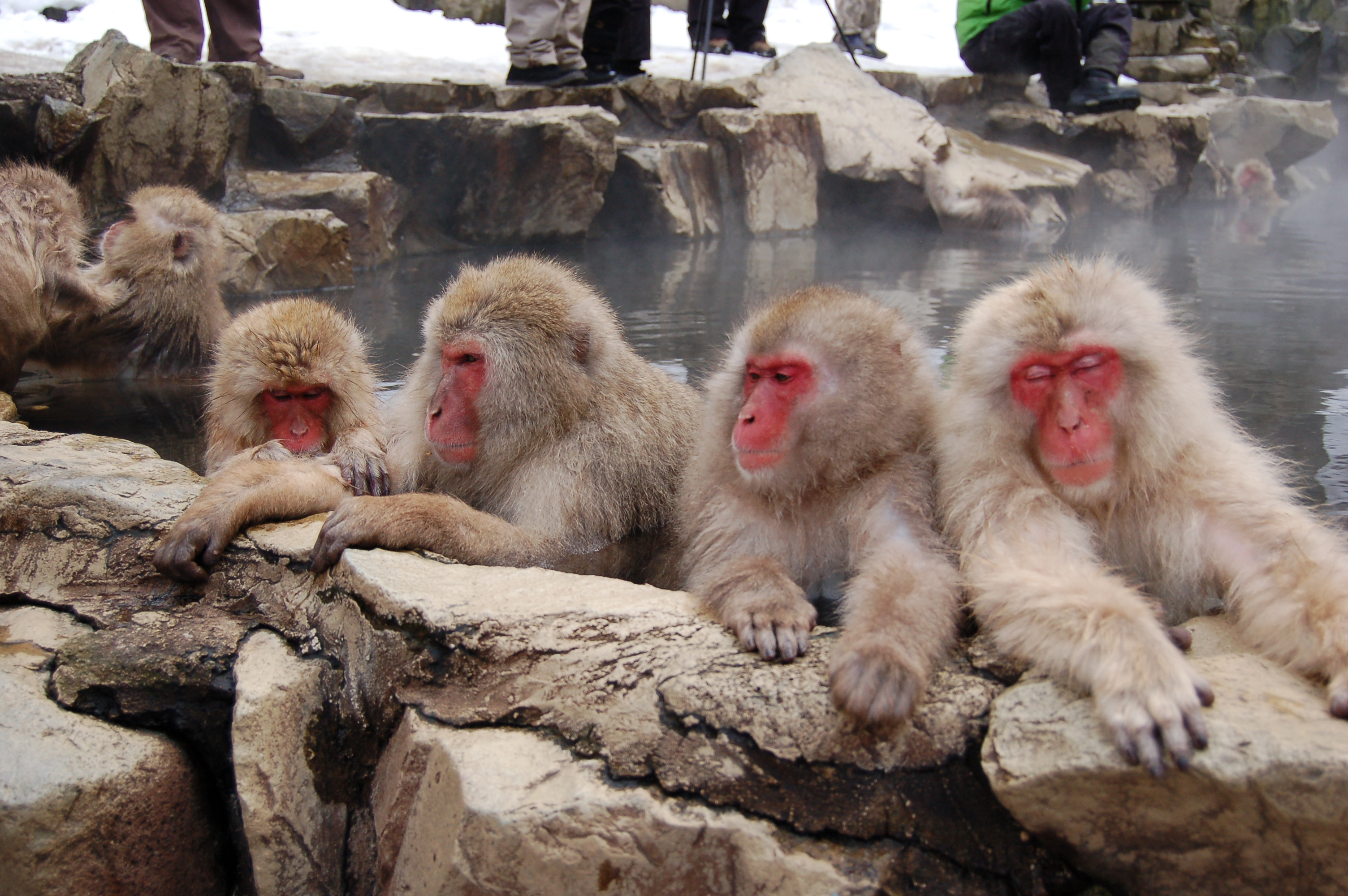
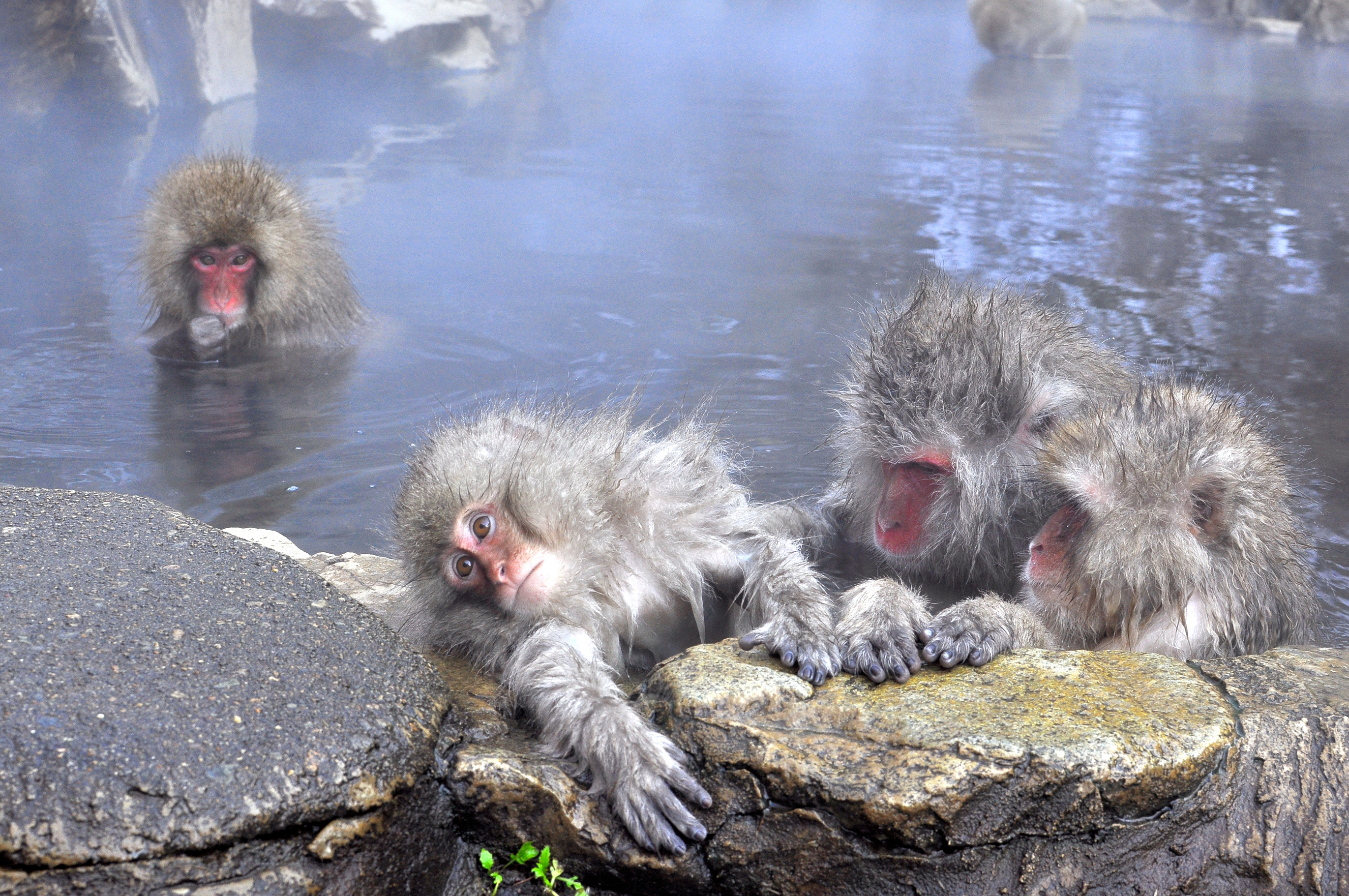
Onsens (hot springs) are as relaxing to monkey as man.

Feeding the monkeys is strictly forbidden so they have no interest in the people taking pictures. Including this baby trying to step on a leaf.

Of course there`s always a show off. This one spotted the tall gentleman and decided to prove who was the man of the hour. Size does matter in the wild apparently.

They were just asking to be picked up for a blogging photo op.

We were told that although docile and uncaring of our presence, touching one would bring on the wrath of the entire clan. A boy threw a snow ball at a baby. We then observed the genesis of the phrase “going ape shit” as the baby`s mother “went ape shit” and chased him off the river bank- both screaming and hissing. Offspring #2 and I gave the mother a high five as she ambled by. Throwing snowballs at that kid had crossed my mind several times. Or maybe something else that would splatter upon impact.

On the way back this fellow posed proudly. Racougar hat?

Zenkoji Temple was a part of this tour. Allow me to give you the highlights. The first statue of Buddha to reach Japan is reputed to reside inside the temple. I say reputed since no one`s seen it for 1100 years or so. The receiving priest confirmed it was in fact the Buddha when interred. A copy of the now hidden Buddha was made.The copy is shown once every 4 years. Our timing was off so we saw a picture of the copy.

The Temple also houses the bell that was rung to signal the start of the 1998 Olympics.

Those are the official reasons to visit. Then there`s the unofficial reason.

The tunnel underneath the temple.

Fun was had by all as we descended in to the depths beneath the temple on a quest to turn a key that would allow us to gain entry to Heaven. Really, we all need the insurance. So dark was this hole that the only means of  orientation was by keeping a hand on the wall to the right. I was more concerned about oxygen deprivation as Offspring #2 had a death grip on the hood of my jacket cutting off the air flow through the wind pipe.

The guy directly in front of me pronounced loudly “Someone has her hand on my bum.” (Always good to have an Aussie along for entertainment)

We tried the local delicacy- fried locusts. Although they looked more like crickets to my eye.

Photo by Heidi Sanford

A demonstration to prove the edibility of plague causing insects:

Photo by Heidi Sanford

My peace is made with the monkey.

I hope I`ve not abused the shark.

Tour led by Evergreen Outdoor Center in Hakuba, Japan

Posted in Uncategorized | Tagged , , , , , , , , , , , , , , , | 45 Comments

You Can`t Judge A Book By Its Cover- the Kimono

The kimono. Long thought by Western cultures to be an elegant robe, loosely wrapped and cinched with an elaborate belt allowing Japanese men and women to conduct the business of daily living devoid of the discomforts associated with ties and stockings. The kimono  transcends fads such as those producing leggings and minis on a woman too old to know better. I recently discovered this traditional dress worn for centuries is the example of a wolf in sheep`s clothing. Their robe like appearance belies the vice-like constriction which categorizes them as a little known instrument of torture. It is also possible that the kimono could be used as a diet aid since eating is impossible while wearing one. As is breathing.

Recently I attended a traditional New Years Luncheon hosted by a group of Japanese women.  Hidden among the sky scrapers of downtown Tokyo, Happo-en is an oasis of old Japan. The imposing wooden gates mark the entrance in Japanese. A large garden containing 500-year-old Bonsai trees, cascading waterfalls, and cherry blossoms surrounds the building. A picturesque tea house sits beside a lake. I expected powdered Geisha to parade around the perimeter to complete the picture.

Picture by Heidi Sanford

500 Yr Old Bonsai Trees

It seemed appropriate to wear a kimono.

As I investigated renting a kimono, I discovered two unfortunate facts. The first was that renting the kimono along with the other undergarments would cost between $600-1000. As if. And, it takes two to get one in to a kimono. So difficult, in fact, is the tying of this robe that training is required. Huh? So when one of my friends offered a kimono of her mother`s for me to wear I pounced and requested something indestructible and preferably not a family favorite. My own clothes leave a luncheon looking like I sat in a high chair. Wearing a bib over a kimono might appear disrespectful even if I did have its welfare in mind.

As is typical of the Japanese, my friend called having already thought through every detail.

“Ouisar-san, I have dropped off the kimono. Be there at 10:40 to get dressed. I have made all the arrangements. Bring some dish towels.”

I know not to ask. Just do it. There is a good reason for everything.

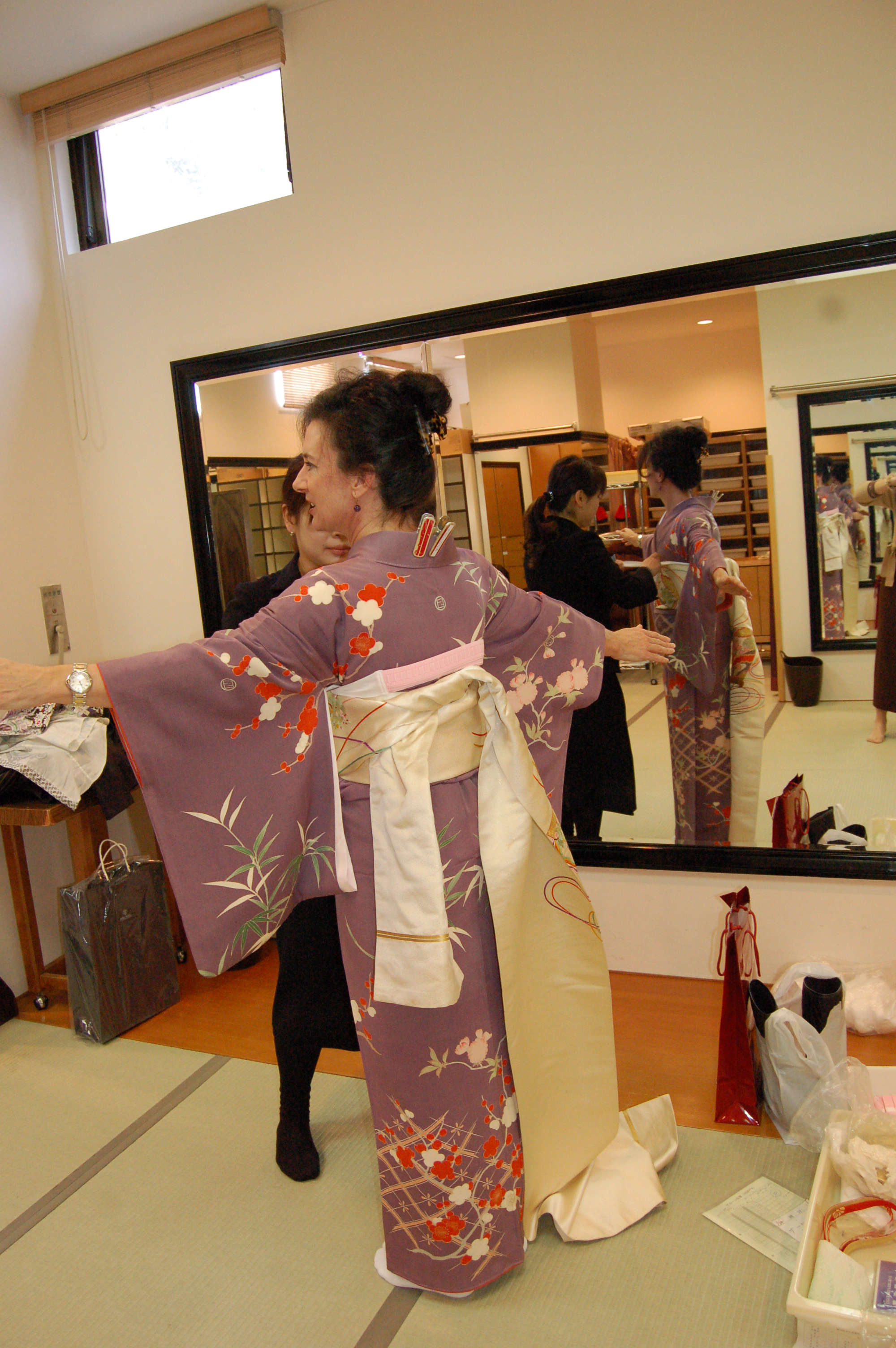
When I arrived at the Beauty Salon, several of my friends were already getting their hair done. Two tiny ladies ushered me in to a tatami matted room surrounded with mirrors. The kimono appeared to be a small portion of what I was to wear. I had no idea what was to come.

That`s when the man handling started. The two ladies dressing me may have been half my height but prior to being dressers they were sumo wrestlers.

First came the underwear. It is the only part that isn`t painful.

Here I am in my underwear- don`t pass it around the internet.

“Ouisar-san- are those dish towels strapped around your waist?”

Why yes. They are in fact dish towels wrapped around my waist. Their function is to flatten out the buttocks region. A woman in kimono should appear as a perfect cylinder and flat when viewed from the side. (I didn`t require any stuffing for the front as it was already perfectly flat) She also put cotton along my shoulders. Probably to absorb the impact from any falls I might take once fully dressed.

Next came an under kimono.

Sash number two above. She was wrapping them as tightly as she could. I soon lost track of all the sashes. I renamed them “Sashes of sufferance.” The Social Chairman documented the process. Not all sashes are included.

Tight!

I struggled to describe “Too tight” in Japanese.

The evil ladies laughed and pulled harder thinking my ability to talk indicated a failing on their part to get my waist down by 15 inches.

At this point I blew out my stomach to gain room as they pulled. Knowing all the tricks, they smiled sweetly,waited for me to breathe, and pulled tighter. A mother boa constrictor would have been proud if her offspring could accomplish such constriction. They must know something about saddling horses. When they heard ribs cracking, one declared the obi drawn.

All my organs were now either above or below my obi. My lungs and stomach were both fighting for space in my throat. The more discomfort I felt, the happier these ladies became.

And I still had to squeeze in to the shoes.

Also designed to be irritating, the zori sandals and tabi socks are supposed to be three sizes too small. The heel of the foot must overhang the back of the sandal as a marker of proper fit.

Did I mention I was roasting from the inside out? Between the layers, the stuffing, and the tightly bound clothing holding in body heat, I was concerned that my spontaneous combustion might ruin the party.

The kimono and obi I wore were antiques. Many of the kimonos are handed down through the generations. These are stunning works of art as opposed to my mother`s red,white and blue paper dress from the 70`s.

Hair is usually worn up to highlight the back of the neck. The poor woman in the salon attempted to hairspray the hair on my neck away; she didn`t know it only responds to wire clippers and dippity doo.

Antique obi and kimono

Hand embroidery

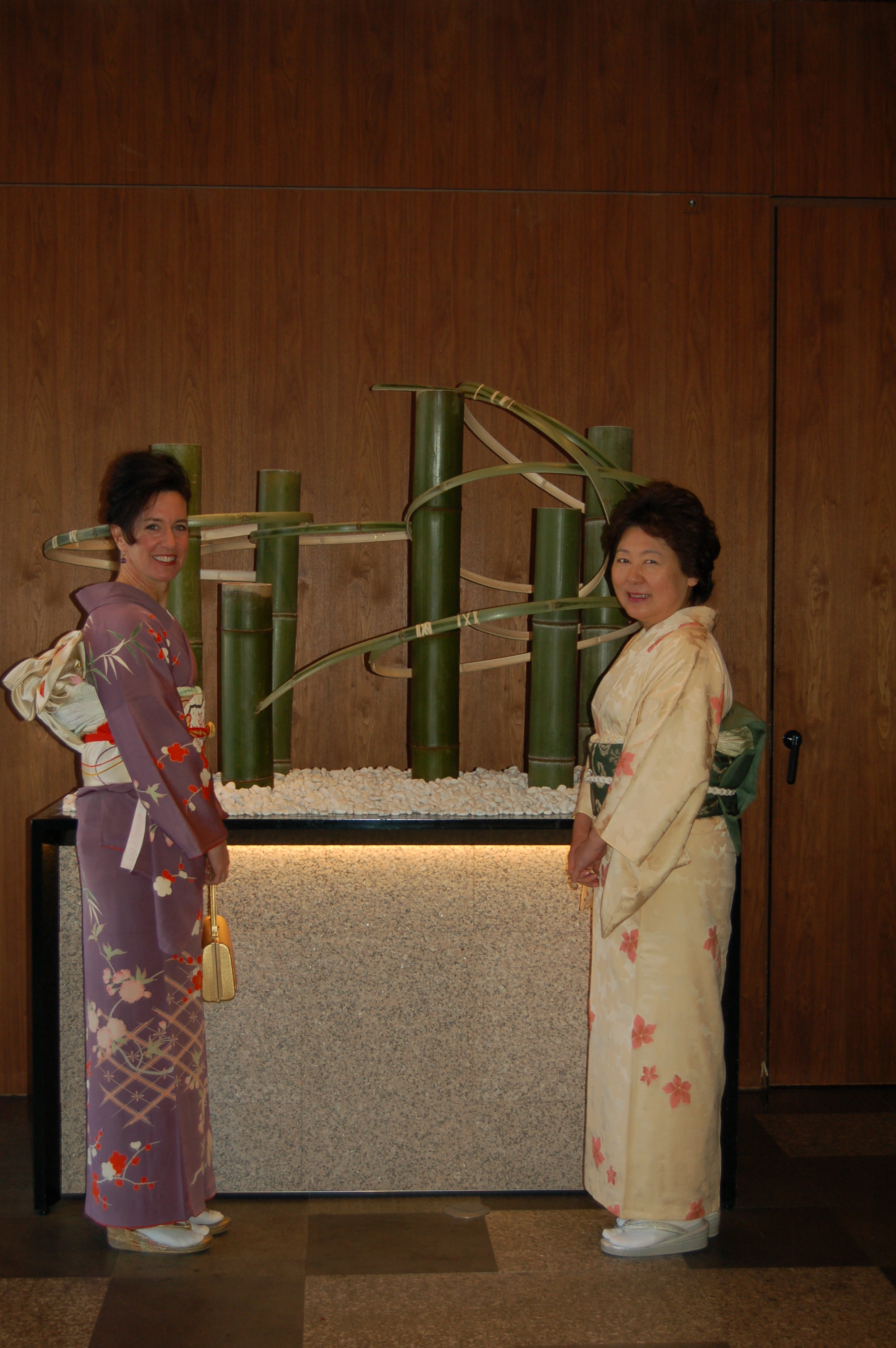
New Years Toast- The kimono I`m wearing belongs to my friend on the far right

In Japan, if you want something a Japanese friend owns, simply compliment that person on it. Chances are good they`ll feel obligated to give it to you. The Social Chairman learned this lesson during the luncheon. She complimented the hostesses on the choice of sake. Soon the bottles were back out and being passed around. Then one of the uber sophisticated ladies hurried behind the bar to snatch a bottle. And put it in her purse.

My purse wasn`t quite large enough to carry a bottle of sake. However, my kimono was. It was then the ladies showed me the hidden pockets in the kimono. The sleeves are cavernous pockets, large enough for several bottles of sake, the flower arrangements, some desserts, and anything else I may have wanted to filch on my way out.

All dressed and ready to go

A kimono makes every woman beautiful. Elegant. Graceful. It`s no wonder they`ve been worn for centuries.

All photos taken by Heidi Sanford

Posted in Moving to Japan | Tagged , , , , , , , , , , , , , | 63 Comments

What Not to Do While Visiting an Onsen

Several years ago I left my persona as a corporate climber and established myself as a trophy wife. That pesky full length mirror in our shower insists, however, that I am in fact a consolation prize won for participation only. I`m not alone among American women in my discomfort with the naked form. Generations after the Puritans settled America, their influence is still felt.  Or this is the group on which I`ll pin the blame as many other cultures, including the Japanese, don`t suffer from the same aversion to appearing unadorned. At least in a public bath.

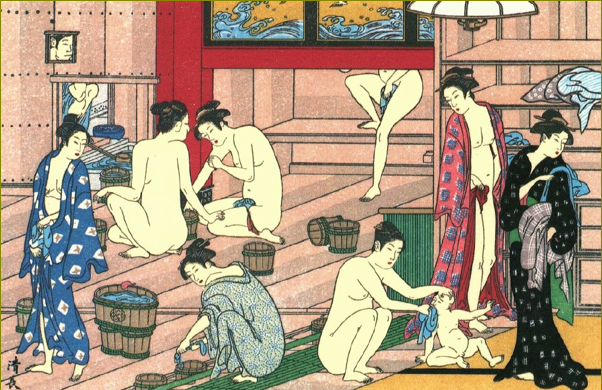
The Japanese have been partaking of the daily bath ritual for centuries. It`s most likely the Japanese opposed the black ships sailed by Admiral Perry due to the stench of the sailors. While we were avoiding a good dousing with soap and water due to concern that cleanliness was the first step toward the plague, our Japanese counterparts had perfected the notion of a relaxing immersion both for body and soul.

Ikkeisai Yoshiiku- 17th Century

This was the baggage I carried with me on my first trip to an au naturale onsen.

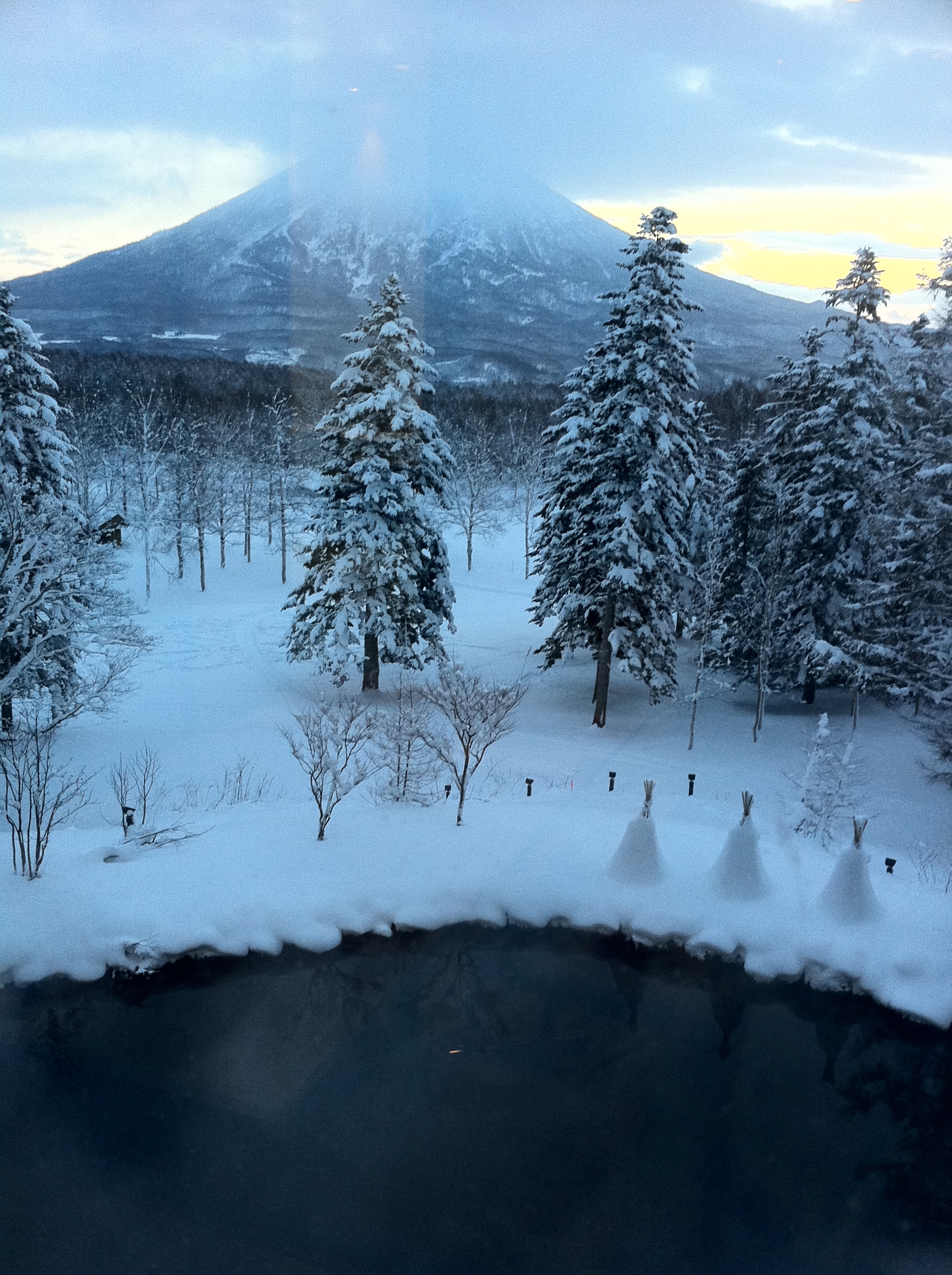
The site was an outdoor onsen surrounded by gasp inspiring views of the snow-covered mountain landscape beyond. And koi. This would certainly be a welcome ending to a day spent filming Offspring #1 careening down, through and over mountains on a snowboard. Whatever the rabbit can do to the stump (go over, under, through, around, inside, on top) OS#1 can do to the mountain. I am not as facile with a stump and often find myself in a prone position with a nose full of snow. If I could get through my modest tendencies, the hot onsen could breathe movement back in to the joints and muscles in early onset rigamortis.

As is tradition, I put on the yukata for the trip down the elevator. I`d been in the elevator on numerous occasions with yukata wearing individuals, however, it felt to me like walking through the hotel in my pajamas.

I tried to recruit Offspring #2.

“No way. Sitting in a bath tub, naked, with your mom is weird.”

Then Offspring #1 pointed out a significant mistake on my part.

“Mom, the yukata is folded wrong. Left side over right side.” A significant face-saving piece of advice since right over left is reserved for funerals.

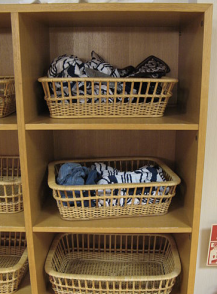
I prepared myself for the pajama march through the hotel. I was vaguely aware of the “process” for entering. Strip down, clothes in a basket, carry a small towel in to another area for showering, and finally, jump in the onsen. Getting caught studying the other bathers for guidance could be embarrassing.

I stripped down and put my clothes in the basket.

The other ladies paraded around the room shoulders back and chin faced forward. Like a prepubescent teenager, I slinked to the shower room.
For illustration only. He was not in our onsen. tokyopog.blogspot.com

Here`s where I encountered several issues. First of all, unlike the other bathers, my colossal buckethead loomed large above the partitions. I would have to keep my eyes firmly pointed to the front. Not 100% sure of the proper use of the accoutrements, I took a peek at my neighbor. She was rinsing with the bucket and sitting on the stool while I was sitting on the bucket and missing the stool. Once the stool was located several concerns attacked me at once. How long can viruses and such live on a stool? Is this even more dangerous to one`s health than placing ones cheeks DIRECTLY on the toilet seat? Should I put the towel on the stool and then sit down? I suppose if onsen participation were a health hazard it would have been noticed during the last 10 centuries. I sat. I draped my towel over the partition.

It promptly fell in to my neighbors bath cubby. Unsure if poking my noggin over the top and asking her to toss it back was impolite, I decided to act like nothing had happened. A life skill I use to avoid embarrassment in many situations. Paper towels could be used for drying in a pinch. When I sprayed her with my shower nozzle, on the other hand, I felt an apology was in order. She wordlessly placed my towel on the partition.

After a thorough soap scouring, I was ready for the onsen.

The other women walked casually to the onsen as I streaked past more hunched over than the hunchback of Notre Dame.

I had read somewhere that it was best to fully immerse one`s self in the water versus wading in an inch or two at a time. The author claimed the bather would feel discomfort at the heat for about a minute before becoming accustomed to the hot temperature. I took this approach. The other bathers politely ignored my “hot hot hot” breaking their meditative moods. It`s true that after about a minute the heat is no longer an issue, for the nerve endings in the skin are completely burnt through and no longer function in a sensory capacity. The process enlightened me to the plight of the lobster headed to the pot, the hissing upon hitting the boiling water, the desperate pinchers grasping for an exit, and finally the fiery red color indicating doneness. I too hissed, grasped for an exit, and finally settled in to the bath a violent shade of red previously only seen on my fingernails.

It was then I realized the Japanese ladies` porcelain skin was still porcelain. While I needed a burn unit, they perched languidly on the side wall and gazed nonchalantly at the view.

Neon colored koi slowly circled the pond in front.

The other women sat in two and half feet of water with the white towels on top of their heads. For some unknown reason, towels on the side are a no no which leaves the head as the only resting spot.

I would have liked some sake....

I realized too late that my towel was a bath towel whereas these ladies had hand sized towels. They all pretended not to notice as I wrapped my towel turban style however, curiosity at the foreigner unaware of towel size proved irresistible and on que, all snuck a peek at once.

Nervous laughter from me followed by an involuntary response by the body of turning an even deeper shade of red -which I thought impossible.

I turned to the side and saw an American woman I know. Under normal circumstances, a friendly hello followed by the pleasantries would have been expected. But naked?

“Well HEY- how are you? I notice your boobs are a victim of gravity too! Sweet!” or

“Hey, there`s a mole on your hind side you may not know about. You might want to have that checked.”

I sat for a minute hoping she hadn`t seen me through the steam. Apparently she was also tongue-tied and slowly moved toward the opposite end. Will the image of her in my memory always be of her naked? Will she always carry a naked image of me? Not a pleasant thought.

I made my way to the edge to watch the koi. Then I looked at the view. Then I got bored. It had been 5 minutes.

Maybe I`m not the bathing type. I swam through the 2 feet of water to the exit for the second most painful part of the experience. Walking from the onsen in snow weather to the door. Although watching the steam rising off one`s body is very entertaining to watch.

All total, I spent about 40 minutes getting ready for a 5 minute dip. I`m certainly the minority, however, as onsens are ubiquitous in Japan and everyone, including the foreigners, loves to visit.

And of course the snow monkeys.

Posted in Moving to Japan | Tagged , , , , , , , , , , | 30 Comments

Coming of Age in Japan- Seijin no Hi

I don`t recall the details of my coming of age other than it was welcomed in an intoxicated stupor. Here I remained for several years following just to ensure I was acting like an adult, or the ones in my family anyway. Reaching the legal drinking age of 21 was the sole arbiter of adulthood where I was raised. The Japanese, on the other hand, celebrate coming of age- at 20- with more pomp and circumstance, and primp, to be enjoyed in various venues.

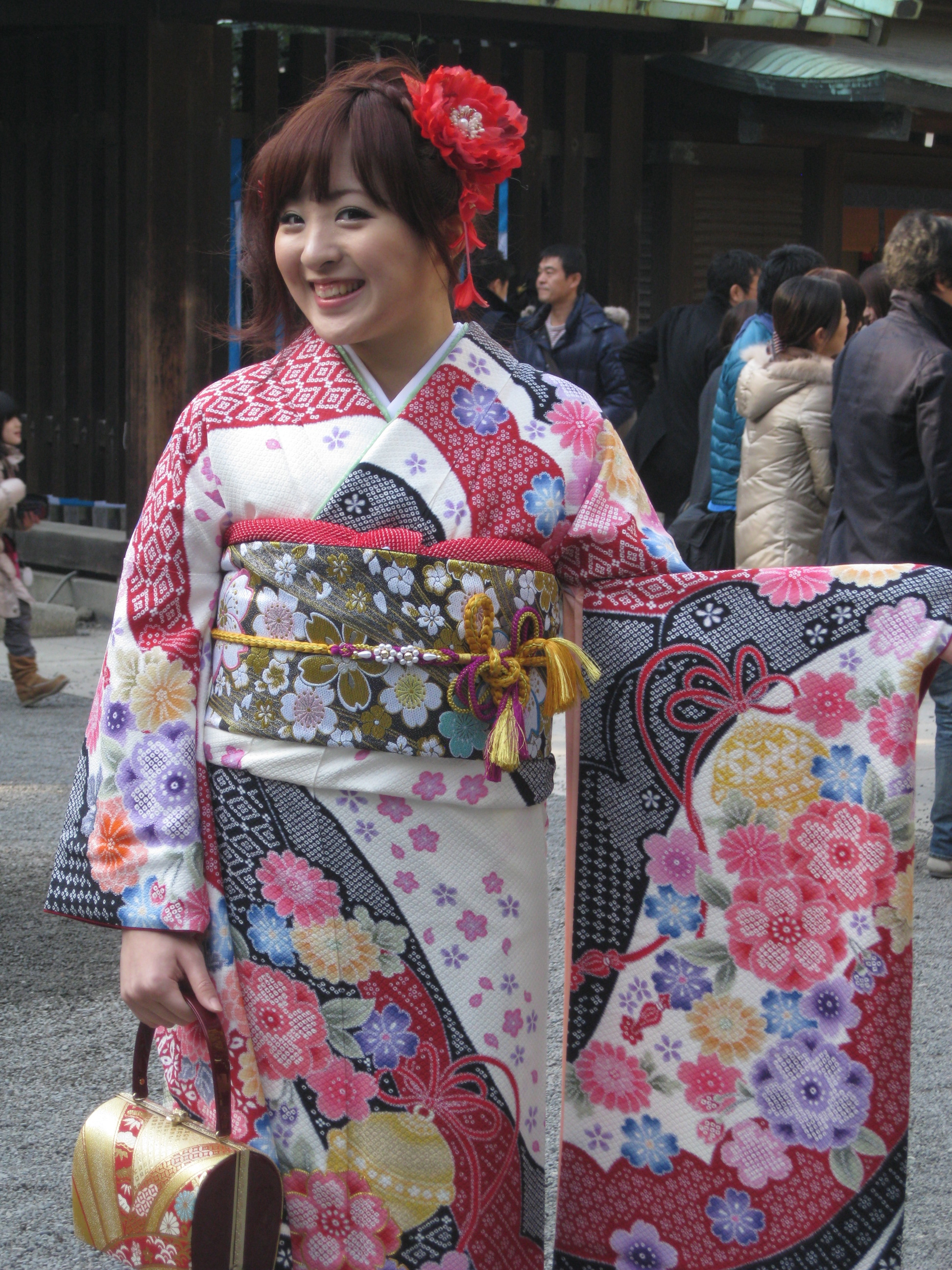
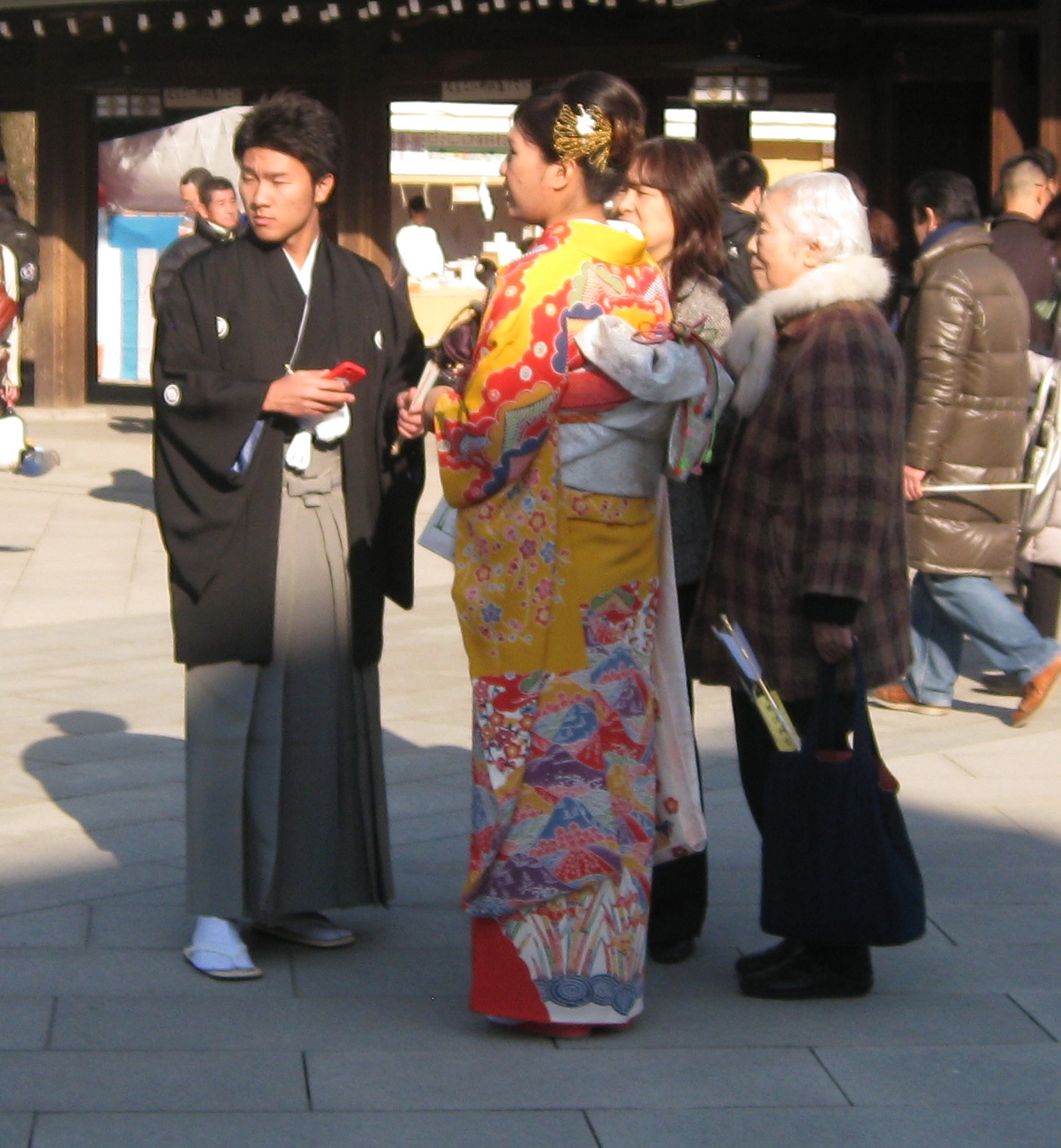
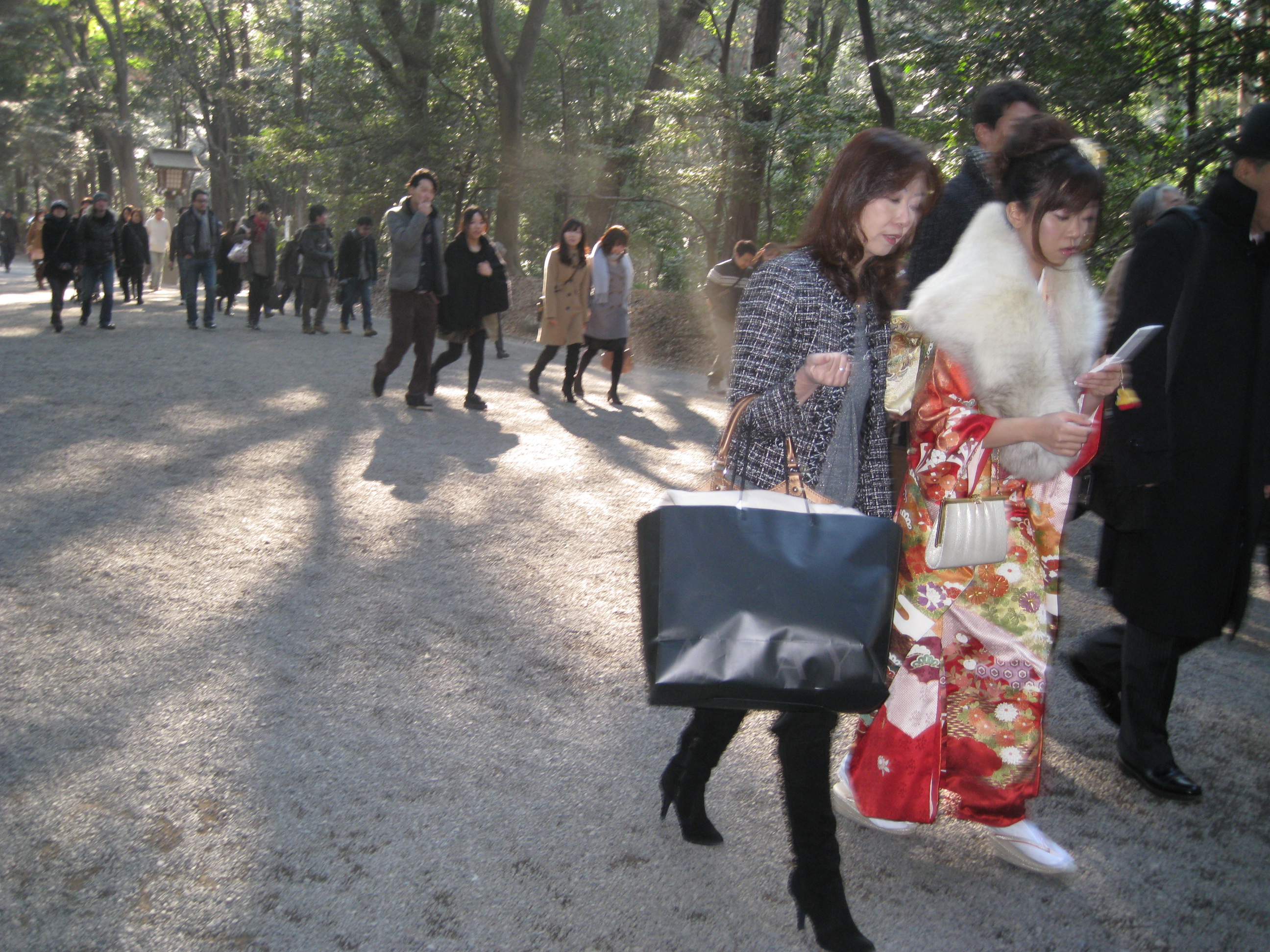
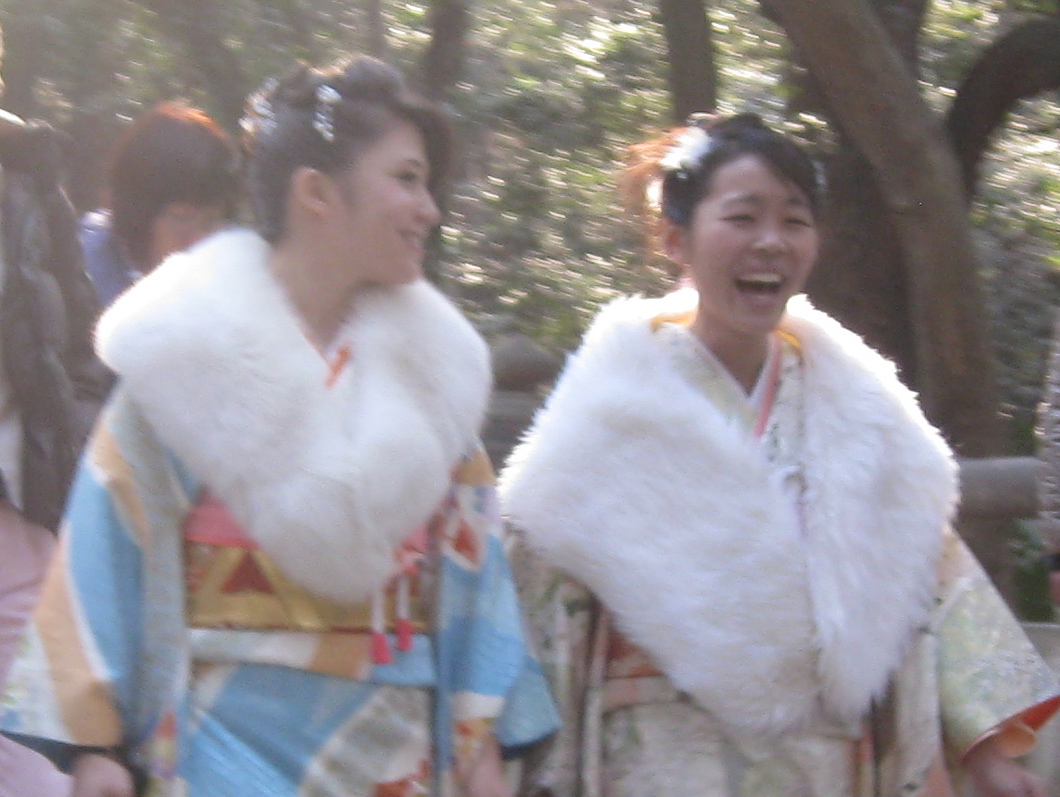
The second Monday of every January is Coming of Age Day, Adult Day, or Seijin no Hi. Fellows, this is an ideal time to visit Japan if your interest leans toward the ladies as all female 20 year old`s don a stunning kimono and totter around town for the Coming of Age ceremonies held in shrines and city halls.

I chose my go-to shrine, Meiji, to see the procession.

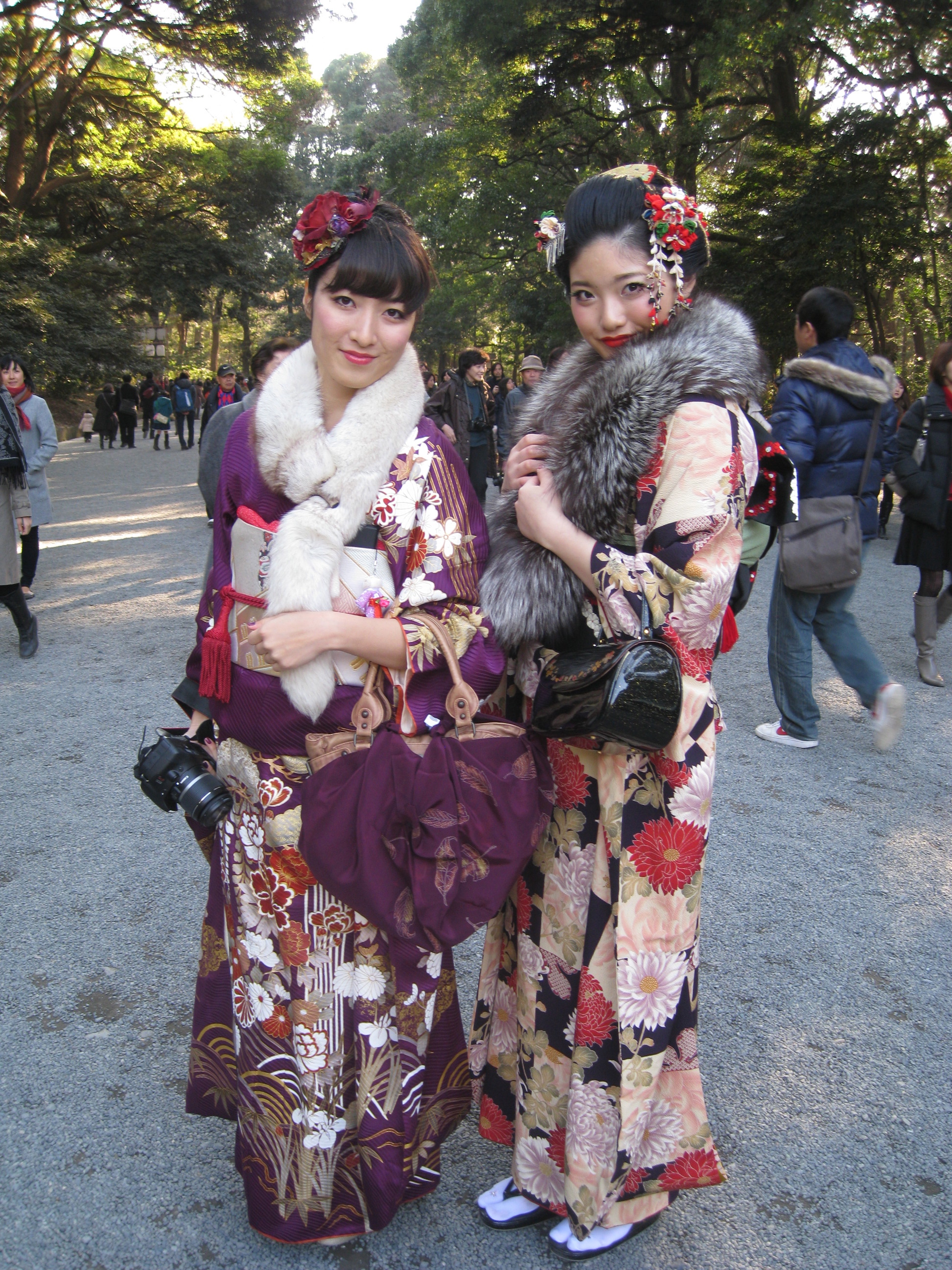
Unlike the American version of the kimono made out of polyester with a tie belt and bought at Kmart, these are heavy silk with several layers of varying designs. Cinched by the obi belt wound around the waist several dozen times in order to keep everything tucked tight. The equivalent of bound feet only in a full body version.

These elegant girls made me feel like an elephant trumpeting around the shrine grounds hair, clothing and camera all akimbo.

Does she know a rabid animal is wrapped around her neck attacking its own tail?

Notice the stark white tabi socks with the kimono. I thought Nike tres original when the split toe shoes debuted several years ago. Not so avant-garde as it appeared but I now know the Asian inspired fabric was an homage to the shoes` origins.

I spotted one guy out of the entire crowd. The male kimonos all look similar- if not the same- as the one below. Or that`s what I`m claiming, as he was the only one I saw. I did see a Facebook picture of a friend`s similarly kimono`d son. I`ve seen it twice, therefore, it must be so.

The girls shuffled toward the shrine on the gravel paved entrance assisted by moms and boyfriends. Facing a fire while wearing a kimono would be truly terrifying. Between the socks, the zori sandals and several layers of tightly bound kimono, no one gets anywhere quickly. No wonder the ladies happily shed it once Western clothing was introduced.

These girls are giddy because they are now officially able to wear the adult version of the kimono with shorter sleeves.

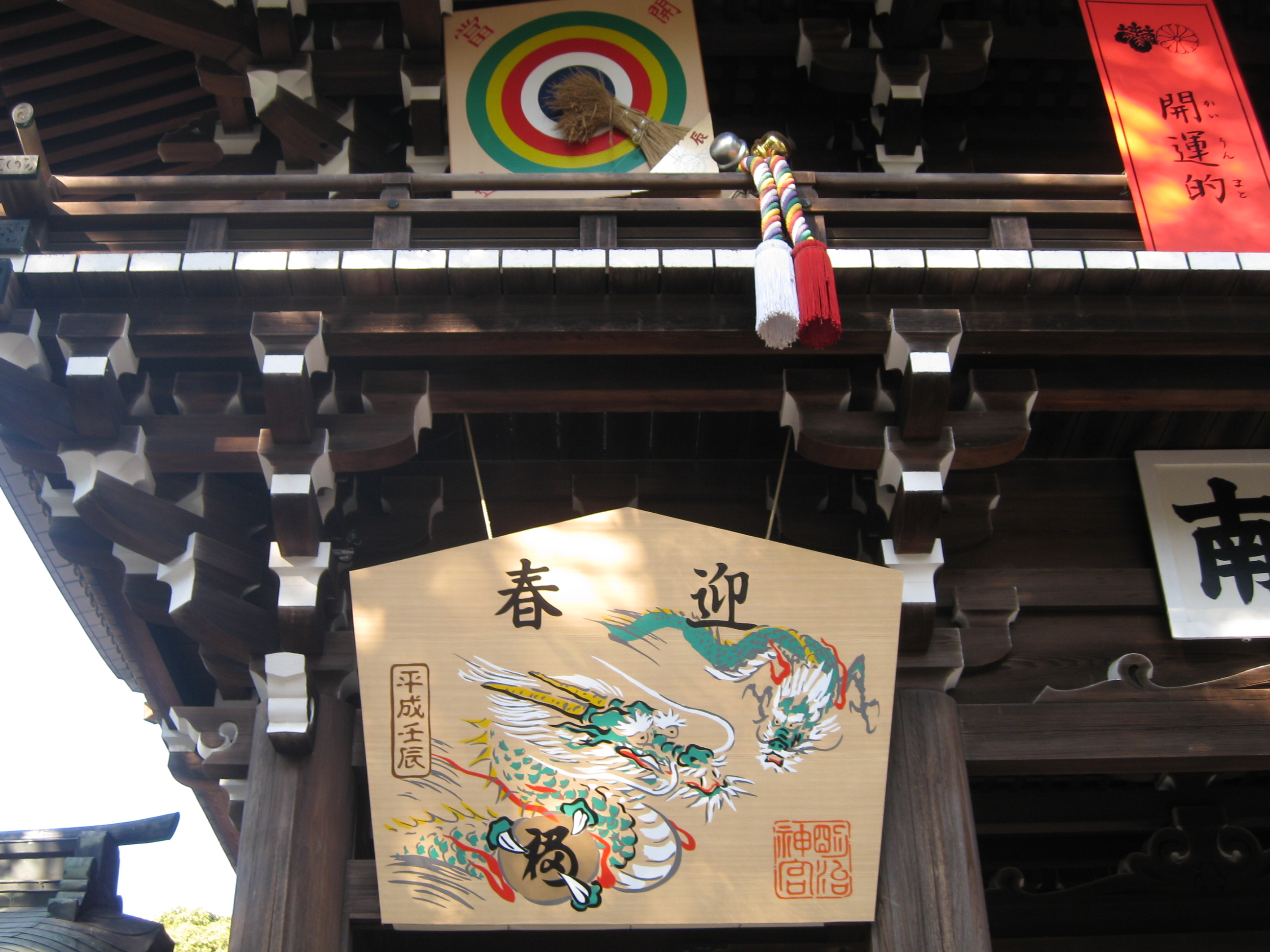
Meiji Shrine changed it`s ema (wooden plaques where prayers are written to be hung in the shrine) to reflect the year of the dragon. The old version is at the top of this page. Just thought you might be interested as it strays from my point.

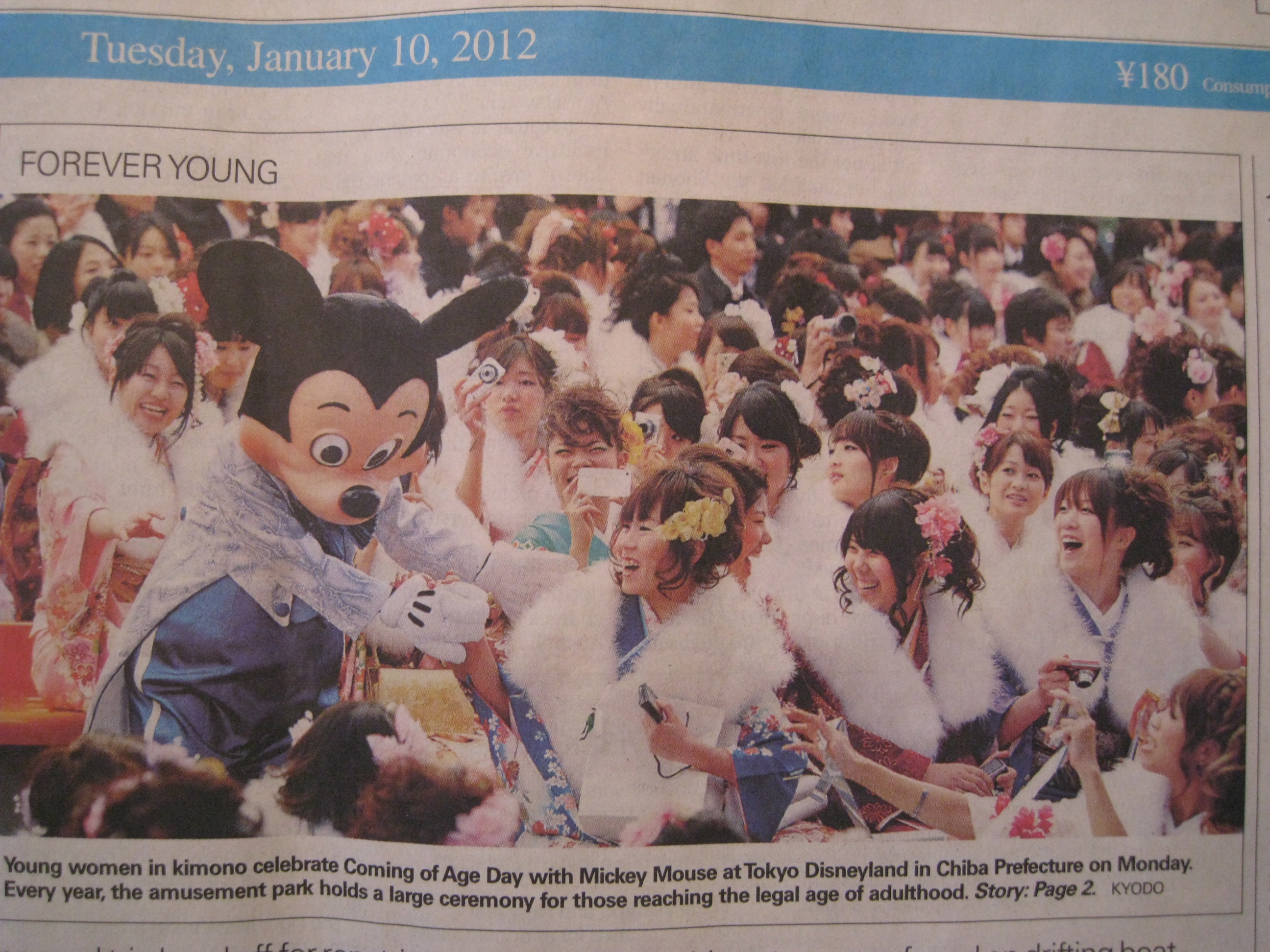
Many chose to celebrate at Disney Tokyo for some odd reason. Mickey and Pluto were definitely not on my invitee list when I turned 21. Miss Piggy? She would have been a good addition.

The Tokyo Times, Kyodo

This is a brilliant marketing ploy by Disney at it gives the crowds something to enjoy while waiting 3 hours per ride.

Next up- a couple more New Year`s traditions.

Posted in Moving to Japan | Tagged , , , , , , , , , , , , , , | 31 Comments

Ringing in the Year of the Dragon- Japanese Style

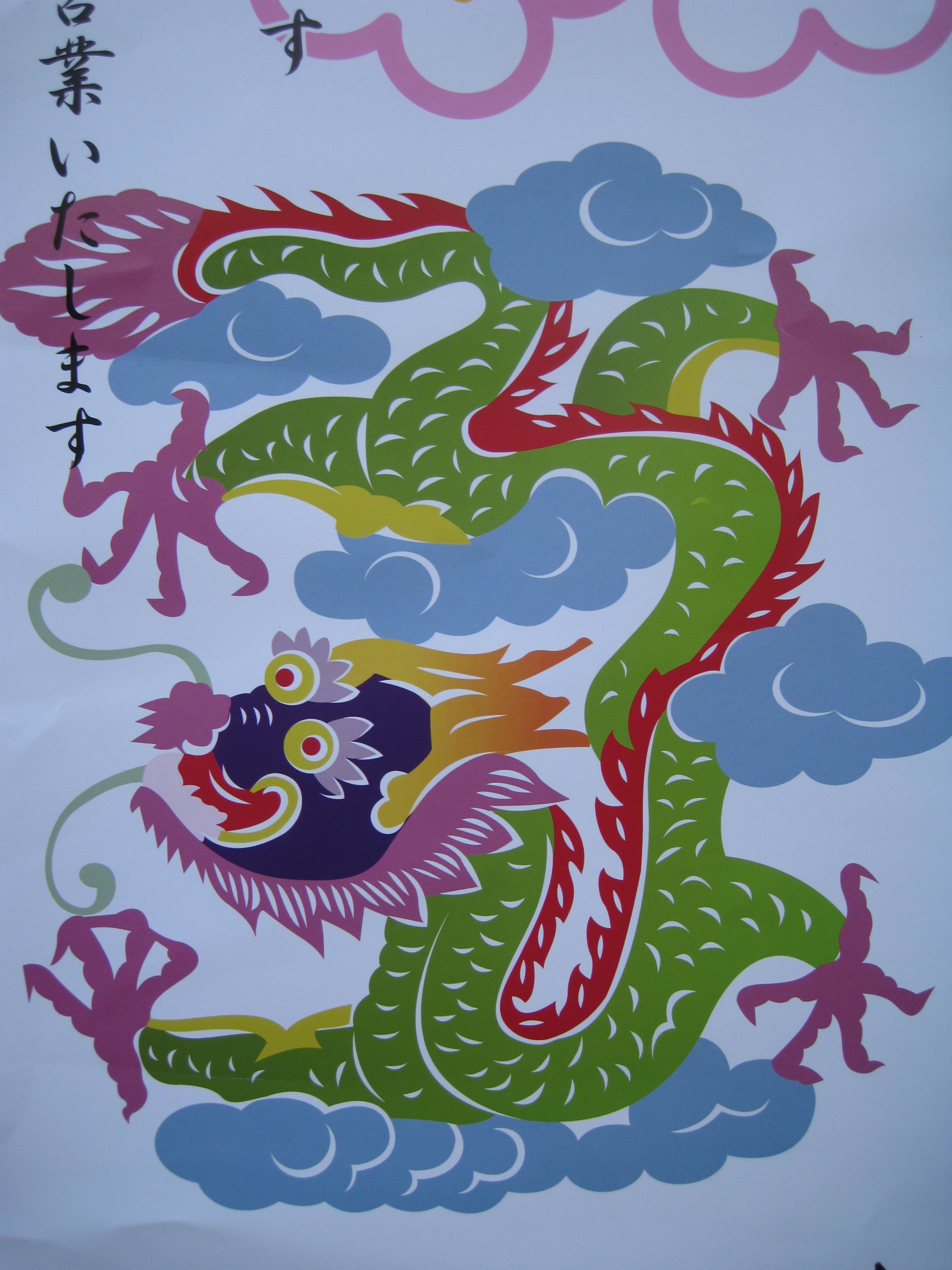
The Year of the Dragon roared in to Japan hailed by a 7.0 earthquake. Somebody`s a drama queen. In spite of that auspicious entry, I think I speak for all Japan residents when I say we are happy to see the fluffy bobbed tail of  2011, the Year of Rabbit, hopping off in to the sunset.

SO- the New Year in Japan.

The Japanese are great adopters of best practices from other cultures including holidays, however, New Year`s feels authentic. Japan rings in the Year of the Dragon ahead of the other Asian countries not following the Gregorian calendar. Unlike our native country, the New Year celebration extends well beyond a midnight toast followed by a television marathon on January 1st.

On January 1, Tokyo rolls up the blinds, turns out the lights, and closes completely until January 3rd as the citizens living in the biggest city in the world celebrate customs started centuries ago. Nothing is open. Last year I contemplated stealing food from the neighbors to last until the grocery stores re-opened. I learned my lesson and stocked 5 days worth of food on Dec. 31st. Flashlights included. New Year`s is absolute in its power to close the city.

Kick started at midnight on Dec 31, thousands of Japanese visit a local shrine to pray for the upcoming year. Last year I realized exaactly how many people live in Japan as we all visited Meiji Shrine. Although cold, I was all toasty mashed in with 8,000 of my human blankets. This year I opted to let TokyoBlingBlog tell the story -See pictures here.

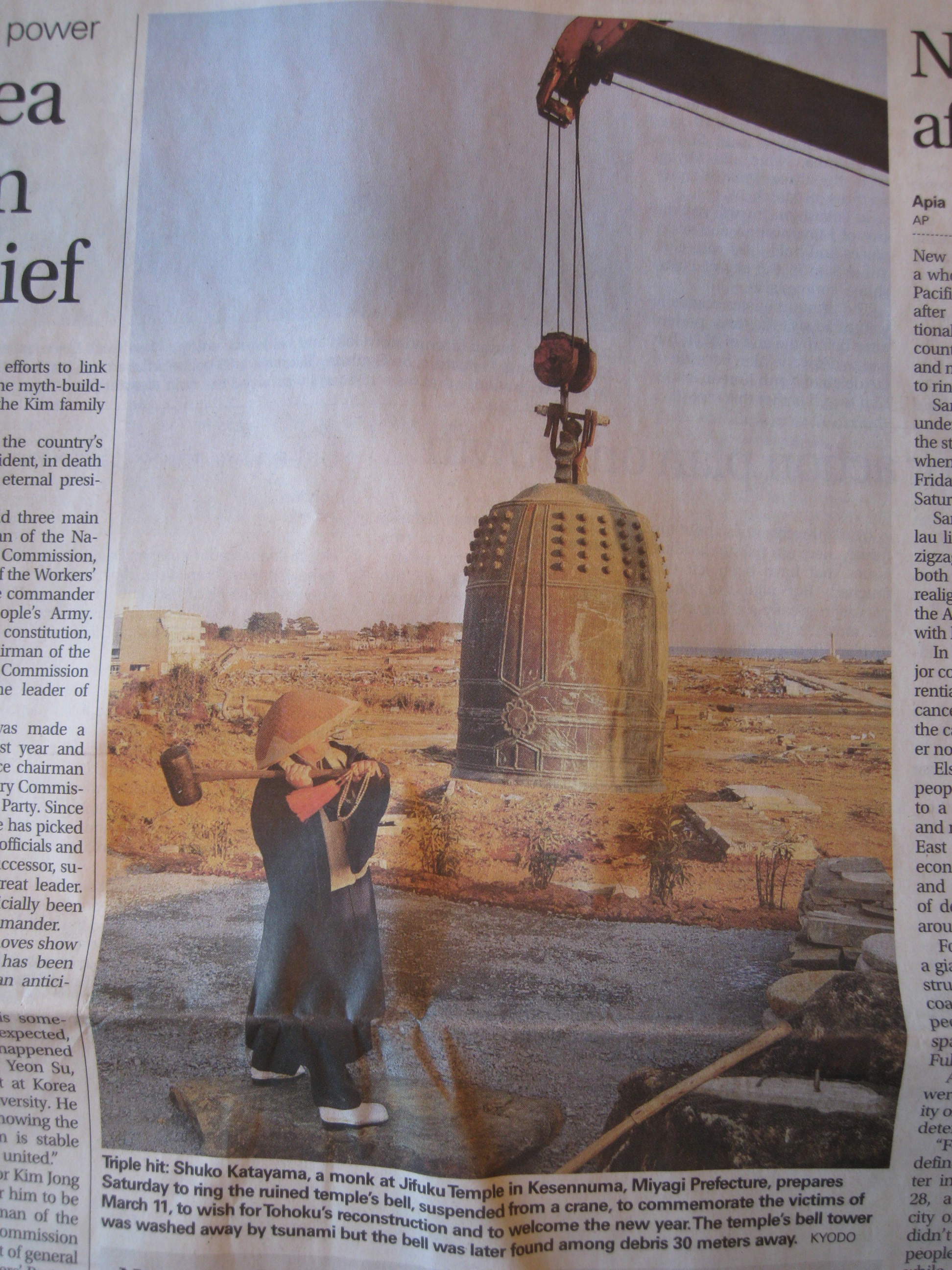
Midnight is marked by the ringing of the temple bell 108 times-one toll for 108 worldly desires. The Buddhists made a more exhaustive list than the mere 10 we Christians recognize.

The Japan TImes, 1/1/12 Kyodo Image

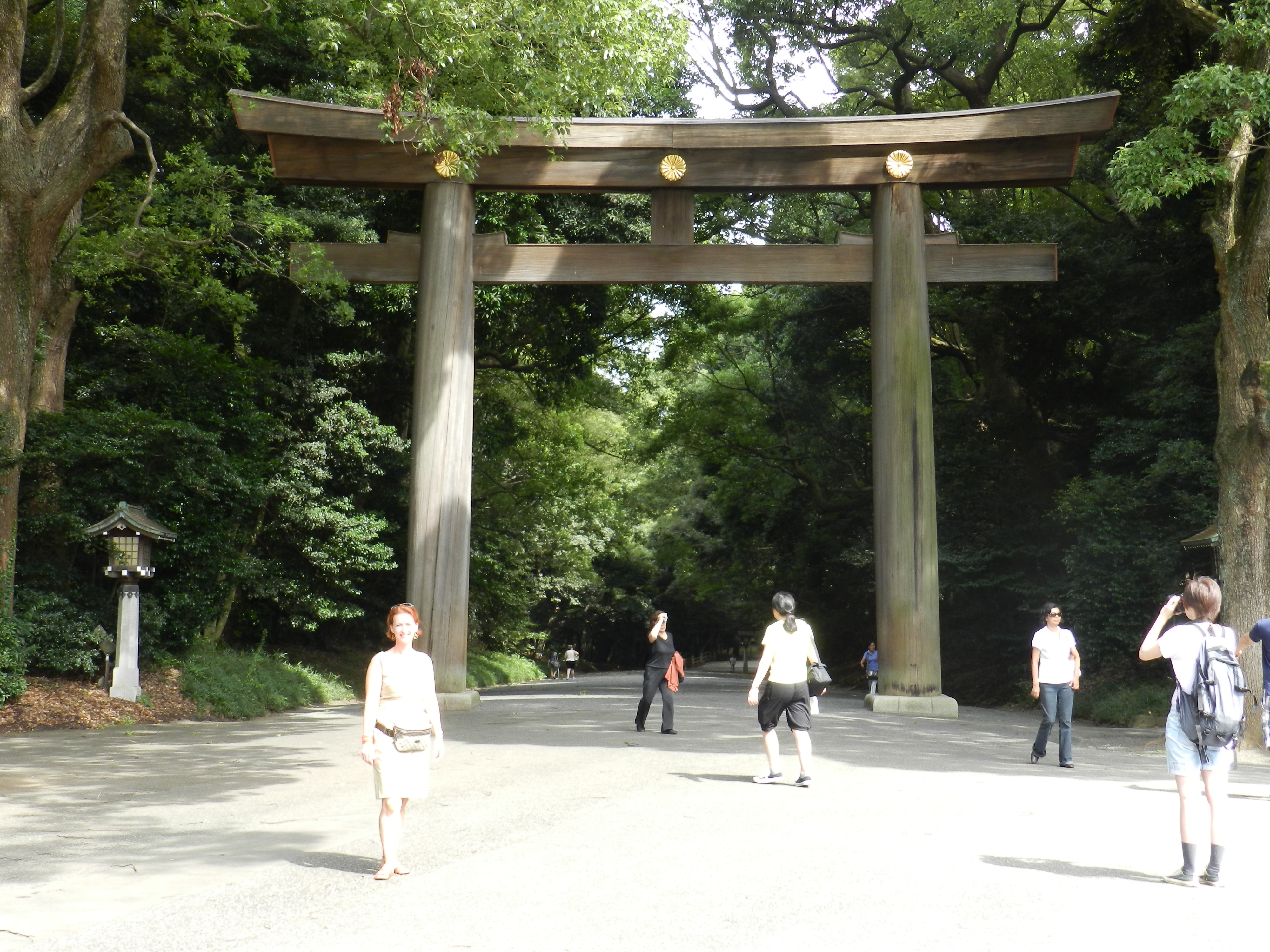
Tori Gate to Meiji Shrine ( The Nose poses for scale)

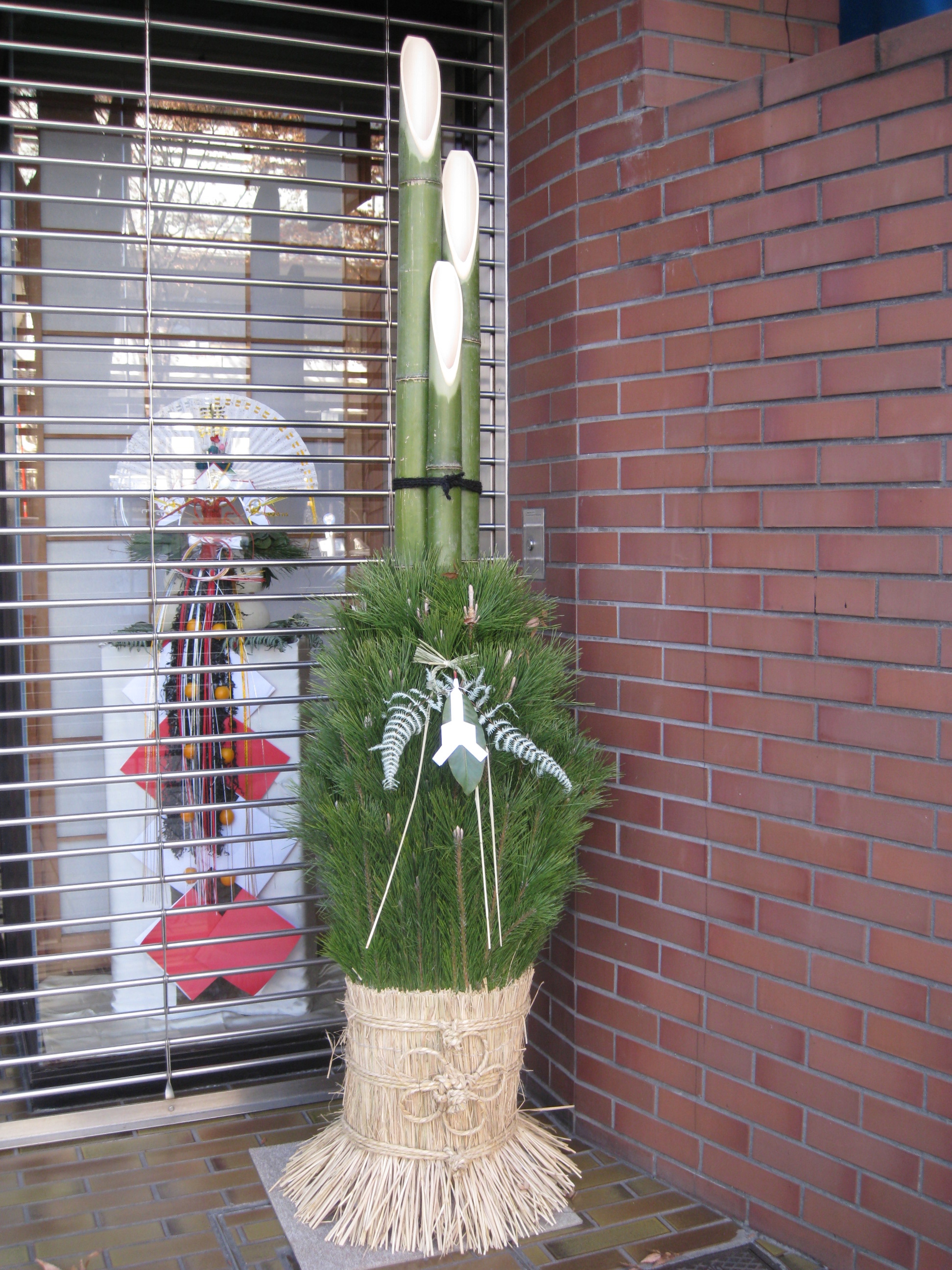
Decorations particular to the New Year pop up like Dandelions. Kadomatsu park in pairs outside businesses. All have three bamboo rods representing Heaven, Humanity and Earth- each of different lengths and all must touch the ground. Pine, the symbol of long life, along with umi tree sprigs are often included. These become temporary homes to the kami, or spirits, of the harvest who bless the home or business owner with a good harvest.

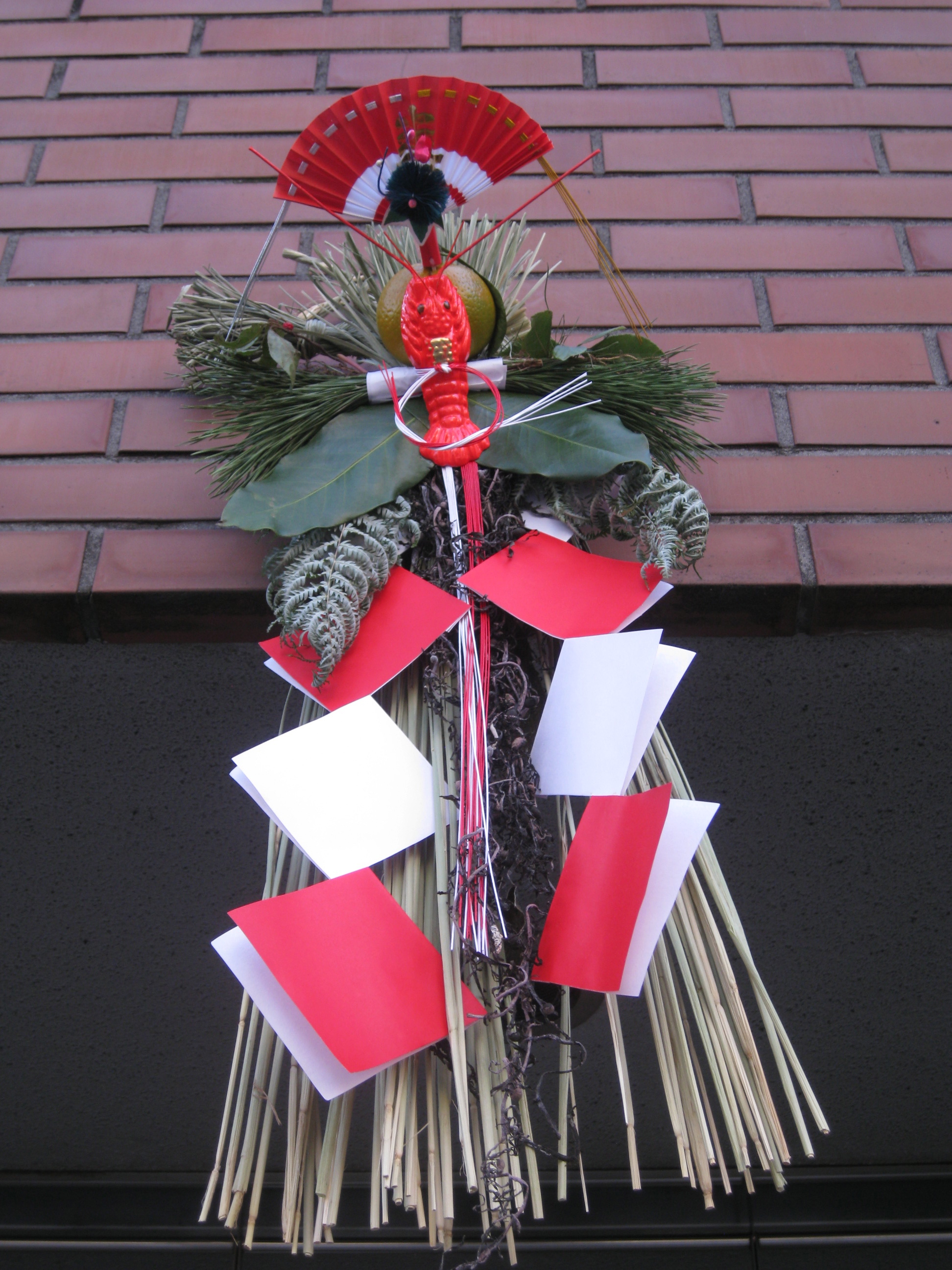
Many New Year`s decorations also contain Gohei- streamers of color that mark a sacred place or purify negative energy. I wonder how they work on teenagers.

The lobster represents longevity and endurance

A renegade with 4 Bamboo trunks

The kadomatsu are burned at the conclusion of the New Year`s celebration to release the kami. Nothing like smoke to clear out the house.

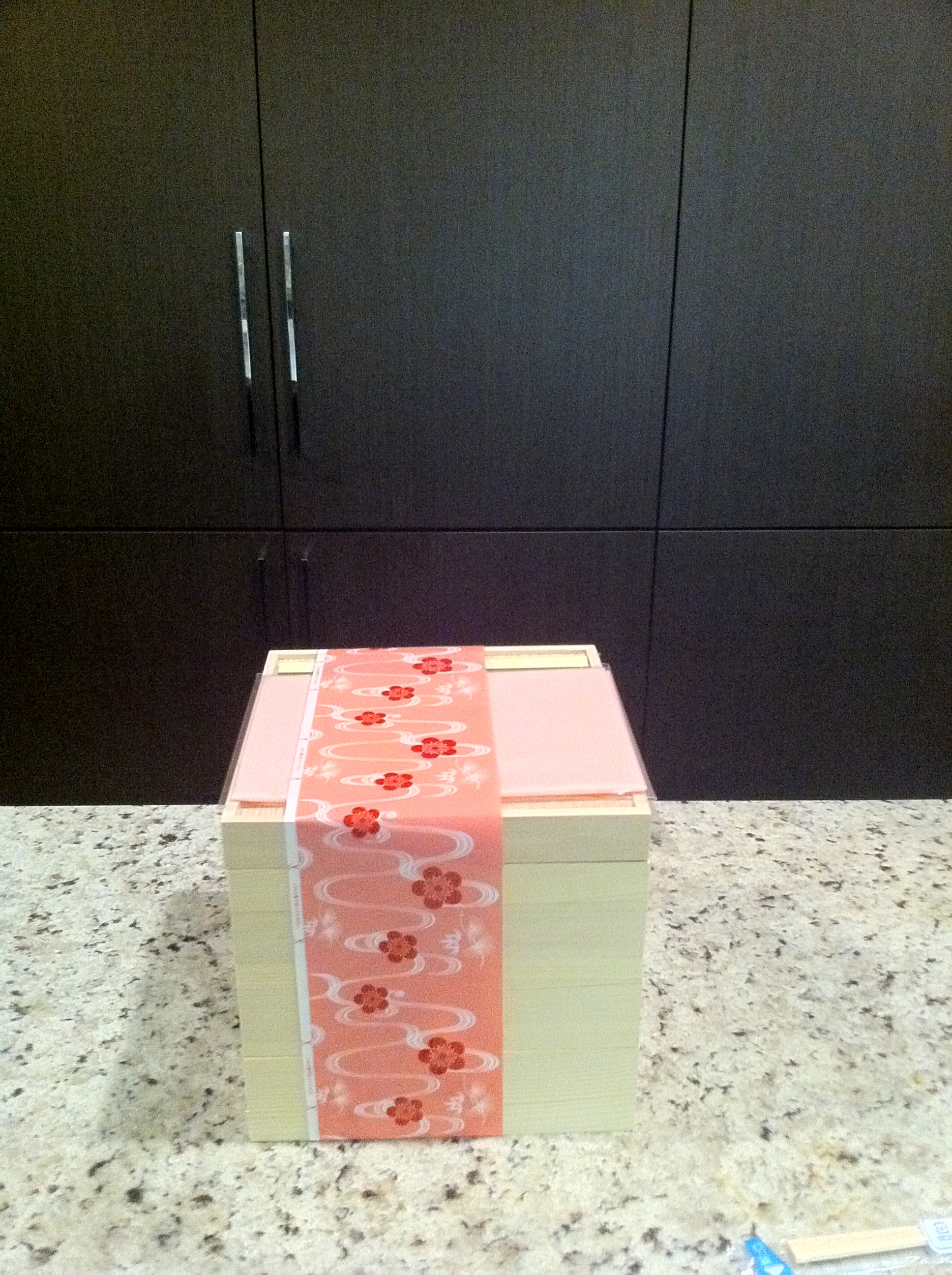
Last year the Clampitts sampled the traditional New Year`s lunch- osechi ryori. The meal is contained in several boxes each stacked on the other. In the old days, New Year`s was the only time women got a full break from work. Samplings were made over several days by female members of the family and stored. Hence, the contents are dried, pickled or stay fresh for several days without refrigeration.

A particular individual who will go unnamed but is the first of my two Offspring called the meal “O retchy ryori, ” and begged for turkey and dressing this year.

One of the traditional snacks ultimately leading to a Clampitt feeding frenzy is the rice crackers.

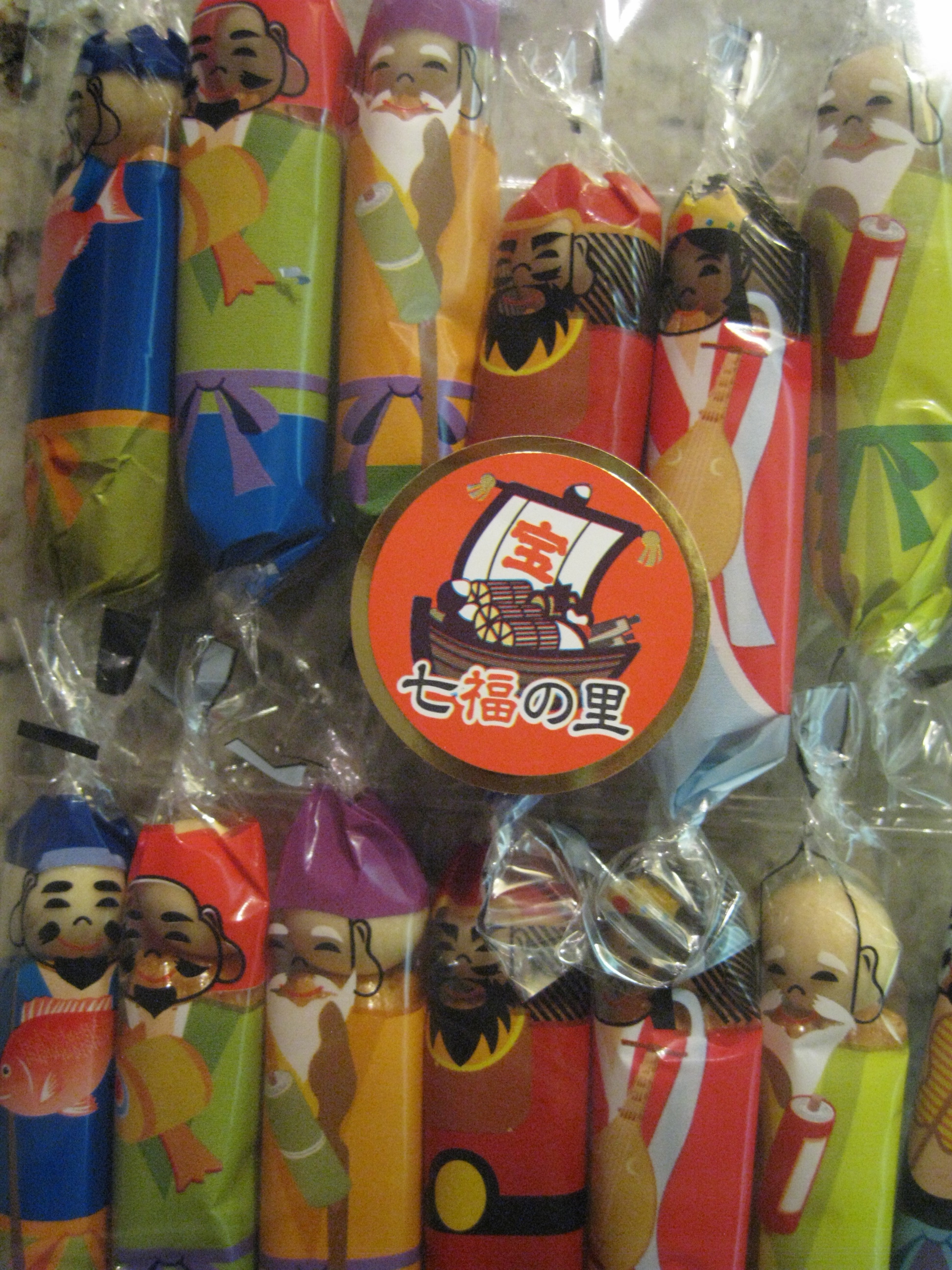
The Seven Lucky Gods of Japan in Rice Crackers

A peanut head with rice cracker body. Tastes like crunch soy sauce.

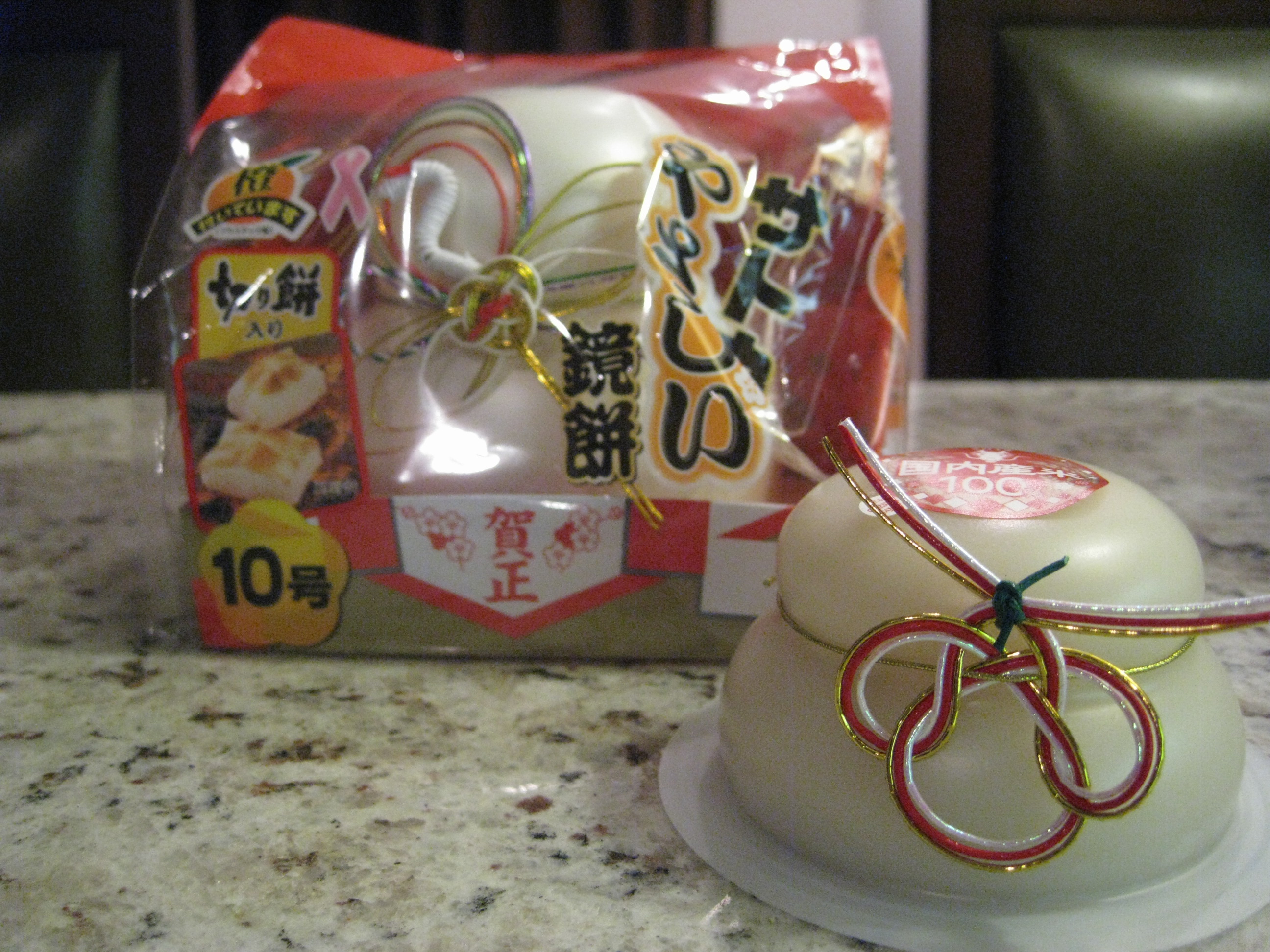
This was billed as a special New Year`s mochi dessert- kyani- with bitter orange topping.

Mochi is made from rice and has a chewy consistency which I prefer to eat surrounding ice cream.  When I finally broke in to the package, it looked, and tasted, like wax. I have several more to crack before I declare an official position on the taste. Hopefully one of my Japanese friends will tell me if these are, in fact, edible.

All the children in Japan – and our nieces and nephews- look forward to these.

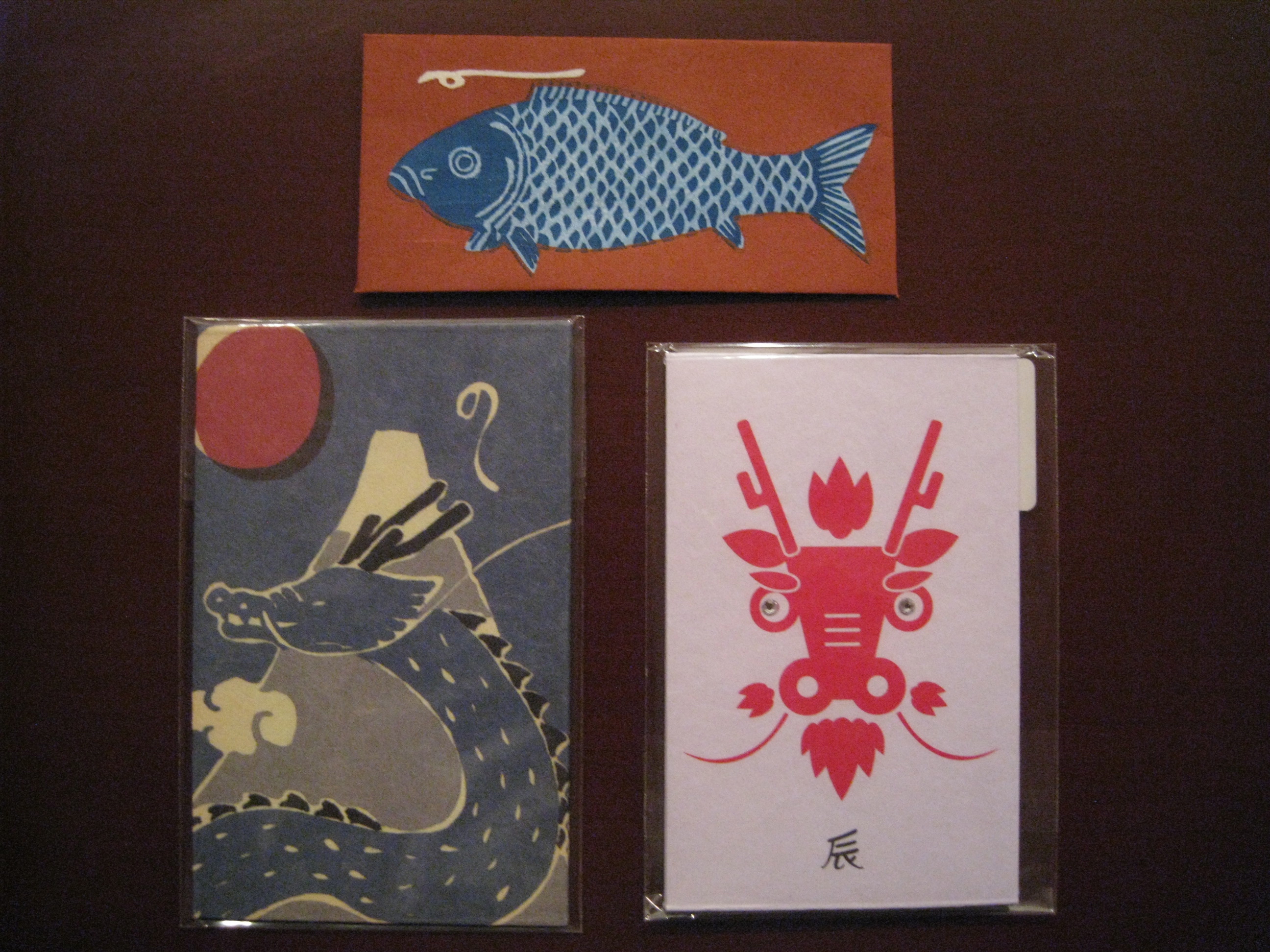
Otoshidama

Otoshidama- money envelopes. In Japan, money exchanged for gifts or between people is usually done in an envelope and rarely are bills passed between individuals as it is considered rude. I`ll still take money with or without the envelope. Our nieces and nephews think these are more like cards to be given in a deck. Of course with money in all.

And finally, New Year`s is about “firsts.”

Hatsunode- the first sunrise. Mount Fuji looks like an ant hill during New Year`s as thousands of people climb to the summit to witness the first sunrise of the New Year.

Hatsumode- the first trip to the temple.

Even Hatsu-uri- the first shopping trip of the year. Hatsu-uri is particularly appealing therefore I plan on making it a part of the my New Year ritual.

I hope all of you have a wonderful and Happy New Year.

Yoi otoshi o omukae kudasai.

Posted in Culture Lessons, Moving to Japan | Tagged , , , , , , , , , , , , , , , , | 38 Comments

Yes- I`m a Temple Snob

After living in Japan for over a year, and visiting thousands, if not millions, of temples and shrines, I`ve become a “Temple Snob.” Enticing the Ouisar-san in to a temple visit now requires a hook. Upon further reflection, the temples which reel me in usually fall in to one of several culturally relevant categories: it houses a giant Buddha, is listed as a UNESCO World Heritage Site, is home to rabid deer, claims a cave temple on the grounds, or contains in it`s description “oldest xxxxx in the world.” Otherwise I`m not going. Especially if its claim to fame is a Zen Buddhist garden.

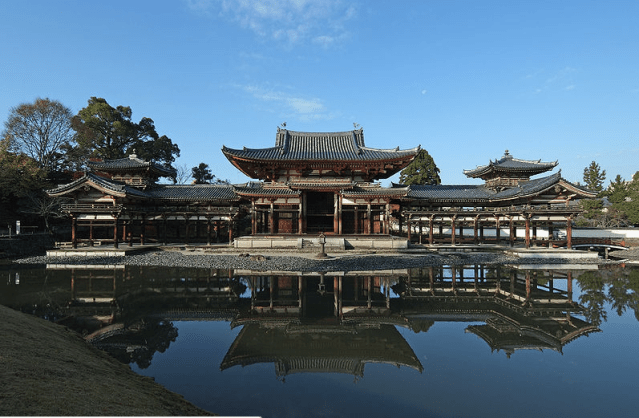
One of my favorites, is Byodoin, or Phoenix Hall, in Kyoto. Phoenix Hall boasts three awe-inspiring hooks- it`s a World Heritage Site, appears on the 10 yen coin, and contains a giant Buddha.

Wikipedia Image

Temple Nirvana.

Great spot for entertaining- or maybe the pond floods.

Adding “ancient” to its claims to fame, Phoenix Hall was built in 998 AD in the shape of a – wait for it- phoenix. Phoenix`s of old apparently contained numerous right angles and were shaped in an x versus the modern rendition resembling a rooster. Using one`s imagination and aided with hallucinogenic drugs, one can decipher the phoenix- the main building comprising the body, the two side buildings the wings, and the rear annex the tail.

Left wing, main body and tail

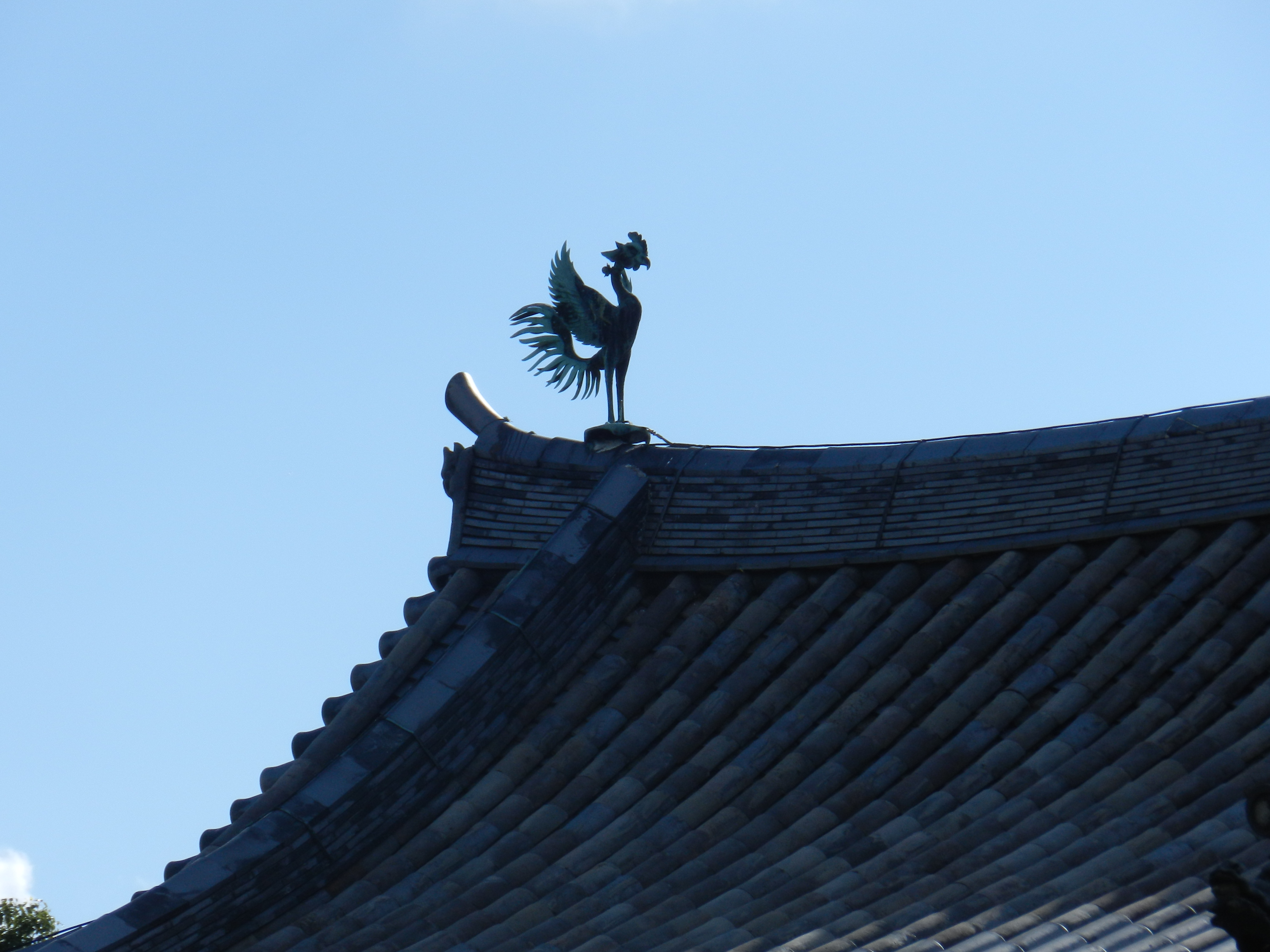
Just in case one missed the shape, numerous examples of the majestic and mythical phoenix squawk from the roof top.

The architect demonstrated his tremendous vision for the future by making the living room large enough for 50 people and a giant Buddha. Lucky for  Fujiwara no Yorimichi who converted the villa to a temple 200 years after it was built. The middle section contains the giant Buddha Amida who gazes benevolently toward the pond. I am curious as to why the architect installed doors allowing Buddha to be seen from outside. Although disconcerting to find a giant Buddha observing one`s moves, his oversight probably keeps the tourists from pilfering plant samples from the garden. Or perhaps it’s just the precursor to the modern-day garage door.

Wikipedia Image

Other celestial bodies line the walls surrounding Amida Buddha. Several carved Bodhisattvas (enlightened beings) play musical instruments or pose reclining on clouds prompting viewers to leave in hot pursuit of an ascension powered by cloud.

Onmark Productions

Observing the local currency is one way of identifying a nation`s hot spots. The Phoenix Hall was first brought to my attention by its presence on the 10 yen coin.

Just a side note- I`d also like to see this from the back side of the American dollar. Must be known as the “Great Seat” if anyone knows of it.

I submit that relics of enlightened beings- fingers, toes, hair, or bodies mysteriously preserved  in glass coffins- such as those we Catholics use as hooks within cathedrals, would be welcomed additions to the temples and shrines.

Those hooks I always pay to see.

Posted in Moving to Japan | Tagged , , , , , , , , , , , , | 21 Comments